Dog Heatstroke Symptoms: Warning Signs and What to Do Immediately
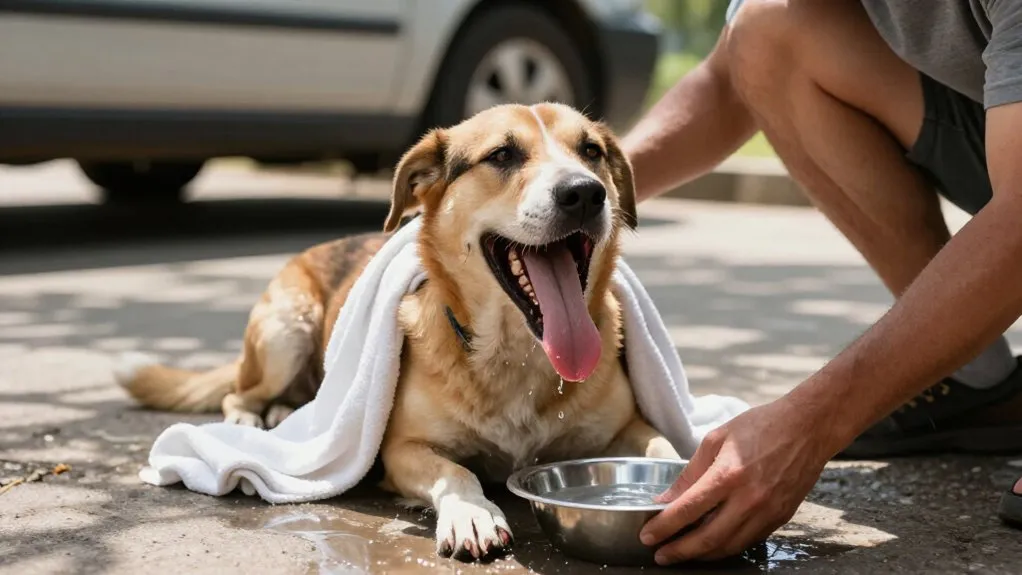
If your dog has persistent heavy panting, thick drool, weakness, brick-red gums, vomiting, staggering, confusion, or collapse, treat it as heatstroke.
Stop activity, move them into air-conditioning or deep shade, wet the chest, belly, groin, neck, and paws with tepid water, and aim a fan across the coat.
Offer small sips only if they’re alert and swallowing. Call an emergency veterinarian immediately; don’t use ice or skip care after cooling. Prevention guidance follows just ahead.
Heavy Panting and Collapse
Heavy, rapid panting that continues after your dog stops exercising or reaches a cool area is an early warning sign of heatstroke, not normal post-activity breathing. If panting remains intense, your dog may develop thick drool, a racing heartbeat, weakness, disorientation, staggering, or collapse. These signs mean overheating may be affecting breathing, circulation, and the brain. Act immediately: stop activity, move your dog into air conditioning or shade, and start gentle cooling with tepid water and airflow. Offer amounts of cool water only if your dog is alert and swallowing normally; don’t force fluids. If you can take a rectal temperature, 104°F or higher requires urgent care. Call a veterinarian while you cool and leave for the clinic, even if your dog seems better.
Brick-Red Gums Signal Danger
Brick-red gums, tongue, or inner eyelids can signal that your dog is dangerously overheated. This deep red color reflects widened blood vessels and increased surface blood flow as the body struggles to release heat. Check the gums by lifting the lip: healthy tissue is generally moist and pink. If the color is bright red and your dog is panting hard, drooling, weak, unsteady, vomiting, or acting confused, treat it as an emergency.
Move your dog to a cool, ventilated area and begin gentle cooling with tepid water and airflow. Offer small amounts of cool water only if they’re alert and swallowing normally. Call a veterinarian while you cool and arrange transport. Pale or blue gums mean shock. Seek veterinary care even if color improves.
Hot Cars Become Deadly Fast
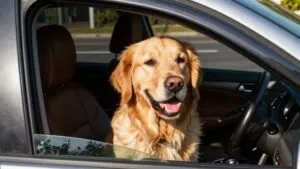
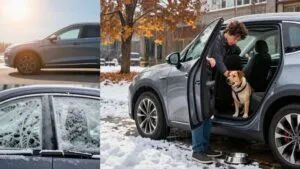
A parked car can become lethal for a dog within minutes, even when the outside temperature feels mild. Sunlight heats the interior quickly, while cracked windows provide little protection. Never leave your dog unattended in a vehicle, even for a short errand.
If you find your dog panting hard, drooling heavily, weak, confused, or collapsed inside a car, act immediately. Move them to air conditioning or shade, begin cooling their neck, chest, groin, and paw pads with tepid water, and use a fan if available. Offer small amounts of cool water only if they’re alert and swallowing normally. Don’t use ice or force fluids. Call an emergency veterinarian and leave for the clinic right away. Improvement doesn’t rule out injury, so prompt veterinary assessment remains essential.
Exertional Versus Nonexertional Heatstroke
You can see exertional heatstroke after vigorous activity in warm or humid conditions, often with rapid onset. Nonexertional heatstroke develops when your dog can’t escape environmental heat, such as in a hot car or unshaded space. In either case, stop exposure, begin safe cooling, and contact your veterinarian immediately.
Exertional Heatstroke Triggers
Exertional heatstroke develops when a dog generates more heat during activity than it can release, often during hard play, running, or exercise in hot, humid conditions. It can occur quickly when you encourage repeated fetch, long runs, hiking, cycling, or intense training without frequent cool-down breaks. Heat and humidity limit panting, so even fit dogs may overheat before you recognize danger.
Risk rises with sudden warm-weather workouts, poor conditioning, dehydration, heavy coats, excess weight, or airway disease. Watch for panting that doesn’t ease after stopping, thick drool, bright-red gums, weakness, or unsteady movement. End activity immediately, move your dog to shade or air-conditioning, begin gentle cooling, and contact a veterinarian urgently. Don’t wait for collapse; early action can reduce severe complications and improve recovery.
Nonexertional Heatstroke Risks
Unlike exertional heatstroke, nonexertional heatstroke can affect a dog that hasn’t been exercising: heat builds when it’s trapped in a parked car, unshaded crate, poorly ventilated room, or humid outdoor space.
This risk rises when your dog can’t dissipate heat effectively, especially if they’re flat-faced, overweight, thick-coated, very young, older, or managing heart or airway disease. Closed windows, limited airflow, direct sun, and high humidity can overwhelm normal cooling, even when you provide water. Don’t assume shade alone keeps an enclosed area safe.
Check your dog often during warm weather, and move them promptly to an air-conditioned or well-ventilated space if conditions become hot or stuffy. Never leave them unattended in a vehicle, and contact a veterinarian immediately if you suspect heatstroke at all.
Key Differences in Onset
Heatstroke can develop within minutes after intense activity in warm or humid conditions, while nonexertional heatstroke may build more quietly as heat accumulates in a confined or poorly ventilated setting. With exertional heatstroke, you’ll often see abrupt heavy, rapid panting that persists after you stop exercise. Your dog may drool thickly, stagger, or become disoriented quickly.
Nonexertional cases can appear less dramatic at first: your dog may pant steadily, seem restless, or grow weak after time in a hot car, crate, or room. Don’t wait for collapse or vomiting. Move your dog to air-conditioning or shade, start tepid-water cooling, and call a veterinarian immediately. Even if signs improve, prompt evaluation helps identify delayed organ injury. High-risk dogs can deteriorate faster in either scenario unexpectedly.
Flat-Faced Breeds Overheat Faster
If you have a flat-faced dog, restricted airways can limit effective panting and cause heat to build quickly. Pugs, bulldogs, boxers, and Boston terriers need extra caution, even in moderately warm weather. Keep your dog cool, limit exertion, and act promptly if panting becomes heavy or distressed.
Why Flat-Faced Dogs Overheat
Flat-faced dogs—including pugs, bulldogs, boxers, and Boston terriers—overheat faster because their shortened airways restrict the airflow needed for efficient panting. Their compressed nasal passages, elongated soft palate, and narrower windpipe can make each breath harder work. Because panting moves heat out through the airways, reduced airflow limits cooling just when your dog needs it most.
You can lower the risk by keeping activity brief in warm weather, choosing cool, ventilated spaces, and allowing frequent quiet rest breaks. Watch for panting that stays intense, noisy breathing, thick drool, or weakness. Stop activity immediately and move your dog to a cooler area at the first concern. Don’t wait for symptoms to settle; heat stress can worsen quickly. Call your veterinarian promptly if breathing remains labored.
High-Risk Brachycephalic Breeds
Breeds with short muzzles—especially pugs, bulldogs, Boston terriers, and boxers—can overheat rapidly because their narrowed airways limit the airflow needed for effective panting. If you own one, treat persistent rapid panting, noisy breathing, heavy drooling, or weakness as urgent warning signs. Risk rises when temperatures exceed 75°F (24°C), during exertion, and with obesity or airway disease.
| Breed group | What you may notice | Your response |
|---|---|---|
| Pug | Labored panting | Stop activity |
| Bulldog | Noisy breathing | Seek veterinary advice |
| Boston terrier | Weakness | Arrange urgent evaluation |
Your dog may deteriorate quickly despite seeming alert. Check gum color and behavior: bright-red gums, disorientation, staggering, vomiting, collapse, pale or bluish gums, or seizures signal an emergency. Stop activity and contact your veterinarian for assessment; don’t wait for signs to fully resolve.
Extra Cooling Precautions
Because flat-faced dogs cool less efficiently through panting, act at the first sign of heat stress rather than waiting for severe symptoms. Move your dog into air-conditioning or deep shade immediately, stop all activity, and use a fan while you apply tepid water to the chest, belly, groin, and paw pads. Don’t use ice water or cover them with wet towels, which can trap heat or cause shivering. Offer small amounts of cool water only if your dog is alert and swallowing normally.
Check rectal temperature if you can; stop active cooling near 103°F. Call your veterinarian and leave for urgent evaluation, even if breathing settles. For prevention, keep walks short and cool, avoid humidity, and never leave your dog in a parked car.
Rectal Temperature Above 104°F
A rectal temperature of 104°F (40°C) or higher signals dangerous overheating in a dog and requires immediate action. Normal canine temperature is about 99.5 to 102.5°F, so don’t dismiss this reading as post-exercise warmth. Move your dog into air conditioning or shade, begin gentle cooling with tepid water and airflow, and call the nearest veterinary clinic while you prepare to leave.
Recheck the rectal temperature every few minutes if you can do so safely. Stop active cooling once it reaches about 103°F (39.4°C), but continue directly to veterinary care. A reading of 106°F (41.1°C) or above greatly increases the risk of organ injury. If your dog collapses, vomits, has seizures, or shows pale or bluish gums, treat it as a critical emergency and seek urgent help.
Ice Baths Can Worsen Shock
Although rapid cooling matters, don’t put an overheated dog in an ice bath or use ice-cold water. Extreme cold makes surface blood vessels constrict, which can trap heat in the body and reduce blood flow to essential tissues. That response may worsen low blood pressure and shock, especially if your dog already has pale gums, weakness, or collapse.
Instead, move your dog into shade or air-conditioning and wet the coat with cool or tepid water, focusing on the neck, chest, belly, groin, and paw pads. Use a fan to improve evaporative cooling. Offer small amounts of cool water only if your dog is alert and swallowing normally; don’t force drinks. Check rectal temperature often and stop active cooling at about 103°F to avoid overcooling.
Skipping Vet Care After Cooling
Cooling your dog to about 103°F is first aid, not a substitute for veterinary care. Even if panting eases and your dog seems alert, heatstroke can continue damaging the kidneys, liver, muscles, and clotting system. Call your veterinarian or an emergency clinic before you leave, and transport your dog promptly for assessment.
- Tell the clinic your dog’s highest temperature, symptoms, timing, and cooling steps.
- Keep your dog quiet during transport and watch for vomiting, weakness, pale gums, confusion, or collapse.
- Expect bloodwork, urine testing, and monitoring; these can reveal hidden dehydration, organ injury, or abnormal clotting.
Don’t assume recovery because temperature normalized. Prompt care gives your veterinarian time to support circulation, correct fluid and electrolyte problems, and treat complications before they become life-threatening more severe.
Aim a Fan Toward Them
Aim a fan at your dog while you apply tepid water and move them into shade or air conditioning. Airflow helps water evaporate from the coat and skin, which supports gradual heat loss. Position the fan so it blows across their wet body, especially the neck, chest, belly, groin, and paw pads. Don’t use ice water or place ice directly on their skin; intense cold can constrict blood vessels and interfere with cooling.
Keep the fan running during transport if it’s safe and practical, but don’t delay emergency veterinary care to set it up. Offer small amounts of cool water only if your dog is alert and swallowing normally. Check their rectal temperature when possible and stop active cooling near 103°F to avoid overcooling.
Conclusion
Heatstroke is an emergency, but your fast, calm response can save your dog’s life. If you notice heavy panting, weakness, collapse, brick-red gums, or a temperature above 104°F, move them into shade or air-conditioning, use cool water and a fan, and call your veterinarian immediately. Don’t use ice baths or assume cooling ends the risk. Even if your dog improves, they need urgent veterinary assessment to detect hidden organ damage and guide safe ongoing care.