How to Help a Puppy With Car Sickness and Build Happy Car Habits
Help your puppy build comfort by starting with brief, treat-supported sessions in a parked car, then adding quiet one-block rides only after several calm attempts.
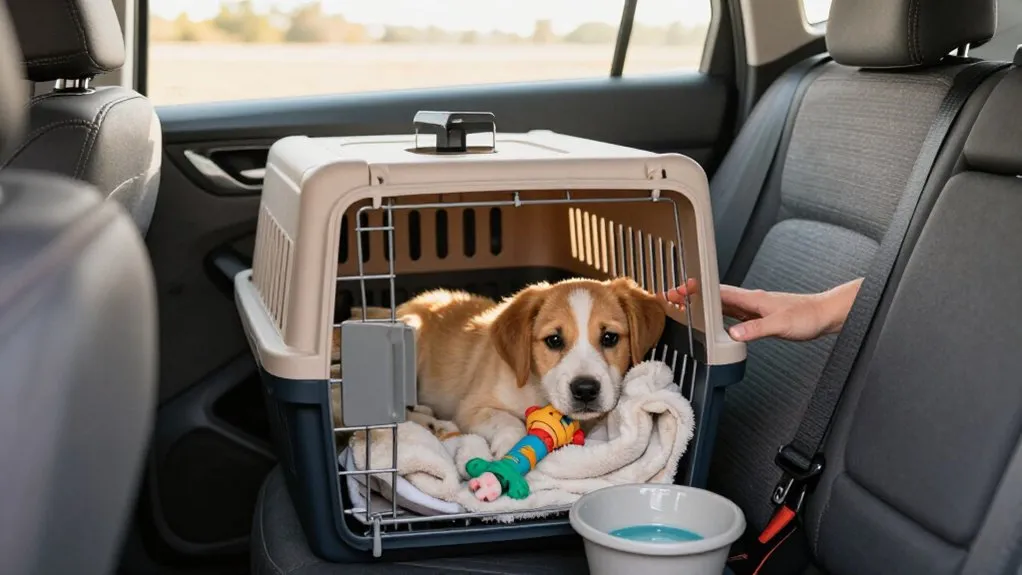
Use a properly fitted crash-tested harness or stable crate, keep the cabin cool and quiet, and avoid meals for two to three hours beforehand.
Lip-licking, drooling, or yawning mean you should shorten the next trip. Ask your veterinarian about motion-sickness medication, and use the steps below to progress more safely.
Calmer Rides: Easy, 2–4 Weeks
Calmer Rides: Easy, 2 to 4 Weeks
Over the next 2 to 4 weeks, you can often make car rides calmer by pairing gradual exposure with safe, low-stress travel conditions. Begin with two or three stationary sessions: secure your puppy in a well-ventilated vehicle, offer a treat, and leave before distress begins. Next, run the engine while parked, then take 2 to 4-minute drives to enjoyable destinations.
Keep the puppy in a harness or stable crate, facing forward when possible. Avoid meals for two to three hours beforehand, but offer water until departure. Drive smoothly, keep the cabin cool, and clean any vomit promptly with an enzyme cleaner. Increase duration only after several comfortable rides.
Watch for drooling, lip-licking, yawning, whining, or vomiting; if signs appear, shorten the next session. Frequent successful practice supports adaptation.
Confirm Vet-Approved Motion Medication
Before your next trip, ask your veterinarian which medication fits your puppy’s age, weight, health history, and current medications. Veterinary guidance matters because nausea can have causes beyond travel, and safe dosing depends on the individual puppy.
- Cerenia (maropitant) is FDA-approved for canine motion sickness and typically starts working within one to two hours.
- Your vet may direct an oral dose about two hours before travel; its effect generally lasts 24 hours.
- Antihistamines can be used off-label, but they may cause sedation, dry mouth, urinary retention, or excitement.
- Don’t use human-label directions, combination products, or supplements without explicit veterinary approval.
- Report diarrhea, unusual sleepiness, agitation, or persistent vomiting promptly, and follow the prescribed timing exactly.
That plan protects comfort and helps identify side effects.
Step 1: Fit a Crash-Tested Harness
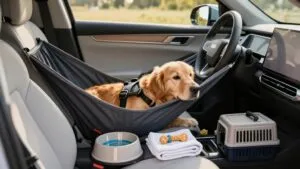
A properly fitted, crash-tested harness keeps your puppy stable during travel, reducing dangerous roaming and the motion that can worsen nausea. Choose a vehicle restraint crash-tested for your puppy’s size and weight; don’t rely on a walking harness or a collar attachment. Follow the manufacturer’s instructions, threading the seat-belt connection as directed and securing it to the vehicle’s belt system.
Adjust the harness so it lies flat against the chest and body. You should fit two fingers beneath the straps, while preventing your puppy from backing out or shifting freely. Check fit before every ride, especially during growth. Introduce the harness at home with rewarded sessions.
A secure, comfortable restraint supports safer, predictable travel, but it won’t replace veterinary assessment for persistent vomiting, weakness, or neurologic signs.
Step 2: Place Absorbent Towels on Seat
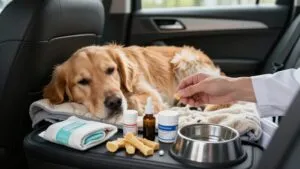
Once your puppy is safely restrained, line the seat or crate area with absorbent towels or washable pads to contain drool or vomit and keep the travel surface dry. Choose nonslip, machine-washable layers that lie flat and do not interfere with the harness, crate latch, or vehicle seat belt. Bring several spares in a sealed bag so you can replace a soiled layer promptly without leaving your puppy on a wet surface.
Avoid bulky bedding that could shift beneath the restraint. After any vomiting episode, remove contaminated materials and clean the underlying upholstery with an enzymatic pet cleaner according to label directions. Eliminating odor residue matters because lingering smells may reinforce nausea or distress on later trips. Towels won’t prevent sickness, but simplify cleanup.
Step 3: Practice in a Parked Car
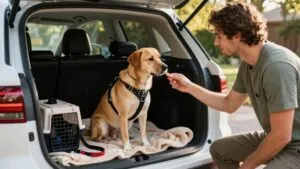
Start by letting your puppy sit calmly in a securely parked car with the engine off for a few minutes. Use a secure crate or vehicle-approved harness, and keep the cabin cool and well ventilated. Offer small, high-value treats or a chew only while your puppy remains relaxed. This stationary practice separates the car from the sensations of motion and helps replace worry with predictable, positive experiences.
Watch for lip-licking, yawning, drooling, freezing, whining, or attempts to leave. If you see stress signals, calmly end the session and try again later for less time. Don’t force your puppy to stay or use the car only for stressful destinations. Repeat brief sessions daily, ending while your puppy is calm. Consult your veterinarian for recurrent vomiting.
Step 4: Drive One Block, Then Stop
After your puppy remains relaxed during several parked-car sessions, take a calm one-block drive and stop. Secure your puppy in a fitted harness or stable crate, facing forward when possible. Choose a quiet route, drive smoothly, and keep the cabin cool with gentle ventilation.
Avoid abrupt braking, sharp turns, loud music, and busy traffic; reducing motion and arousal helps limit sensory conflict and anxiety. End the ride at a low-key location, such as home, a grassy area, or a brief sniff break. Offer calm praise and a small high-value treat if your puppy accepts it.
Then return home or finish the outing before discomfort develops. Repeat this distance on separate days until rides appear comfortable. If your puppy vomits, stop progression and contact your veterinarian.
Step 5: Track Drooling After Each Trip
Keep a simple record of drooling after every car trip, since excessive saliva often appears before vomiting and can reveal whether your puppy is tolerating the current distance. Record trip length, drooling onset, lip-licking, yawning, restlessness, and vomiting. Use a simple scale: none, mild dampness, saliva strings, or heavy soaking.
Compare results across several rides under similar conditions. Less drooling or a later onset suggests your gradual plan is working; increased drooling means the step may be too difficult. Return to an easier distance rather than pushing onward. Contact your veterinarian if drooling is severe, vomiting recurs, or signs occur outside travel, especially with diarrhea, poor appetite, head tilt, or lethargy. Your notes help your veterinarian distinguish motion sickness from anxiety or medical illness.
Step 6: Offer Water After Parking
Once you’ve parked and your puppy has settled, offer small amounts of fresh water to replace fluid lost through drooling or vomiting. Let them drink slowly from a portable bowl or a few sips at a time, especially if nausea seems to linger. Large, rapid drinks may upset an already sensitive stomach and can lead to regurgitation.
Keep the water cool and clean, and provide it in a shaded, calm area after you’ve safely exited the vehicle. Don’t force drinking; stress can worsen nausea, and many puppies need a few quiet minutes before they’ll drink. Watch for signs of dehydration, including tacky gums, unusual lethargy, or sunken-looking eyes. Contact your veterinarian if your puppy can’t keep water down, seems weak, or shows digestive signs.
Confirm Vomit-Free Rides
Track each car trip to confirm that your puppy is truly becoming comfortable rather than simply tolerating the ride. Record date, route, duration, meal timing, temperature, restraint, and vomiting during or hours afterward. Note calm indicators: resting, accepting a treat after parking, and returning willingly.
Consider a ride successful when your puppy completes it without vomiting and resumes drinking, appetite, energy, and bowel habits afterward. Look for a pattern: several vomit-free rides at the same duration support gradual progress. Increase travel time only after repeated successes, keeping other conditions consistent.
One setback doesn’t erase learning; shorten the next trip and review heat, ventilation, food timing, and stressors. Contact your veterinarian if vomiting recurs outside travel or accompanies diarrhea, sleepiness, head tilt, or appetite changes.
Fix Persistent Lip Licking
Persistent lip licking during car rides usually signals early nausea, though it can also reflect stress. Treat it as useful information, not misbehavior. Reduce stimulation: keep the cabin cool, ventilated, and quiet; secure your puppy low and stable, facing forward when possible. Offer water before departure, but avoid a meal for two to three hours. Stop training drives before signs escalate, then resume at an easier level.
| What you see | What you do | Why it helps |
|---|---|---|
| Licking starts | End the drive calmly | Protects confidence |
| Yawning, drool | Add fresh airflow | Eases nausea |
| Freezing | Return to parked practice | Restores safety |
| Repeated signs | Call your veterinarian | Finds treatable causes |
Persistent licking on brief rides warrants veterinary assessment for motion sickness, anxiety, or illness. Early help protects trust.
Wash Harness After Accidents
After a vomiting accident, wash your puppy’s harness promptly with a pet-safe cleaner and rinse it thoroughly before reuse. Remove material with gloves, then follow the manufacturer’s cleaning instructions. If the harness is machine washable, use fragrance-free detergent and a rinse cycle. Otherwise, hand-wash it in warm water and let it air-dry completely.
Avoid bleach, scented products, or harsh disinfectants that can irritate skin or weaken webbing. Clean the seat, crate, and surfaces with an enzyme cleaner. Removing odor residues helps prevent smells from becoming cues that reinforce nausea or anxiety on later rides. Inspect buckles, stitching, and straps before refitting the harness. Replace it if vomiting has damaged padding, hardware, or integrity. A clean harness supports comfort and safe restraint during car-training sessions.
Conclusion
You can help your puppy develop safer, calmer car habits by combining veterinary guidance, secure restraint, gradual exposure, and practical cleanup planning. Over two to four weeks, track nausea signs, avoid forcing progress, and reward relaxed behavior after each brief, successful ride. Ask your veterinarian about persistent drooling, lip licking, vomiting, or anxiety; medication and tailored training may help. With consistent, vomit-free practice, you’ll reduce stress, protect your puppy, and make travel more comfortable overall.