What Size Dog Seat Cover Fits Your Car? How to Measure Before Buying
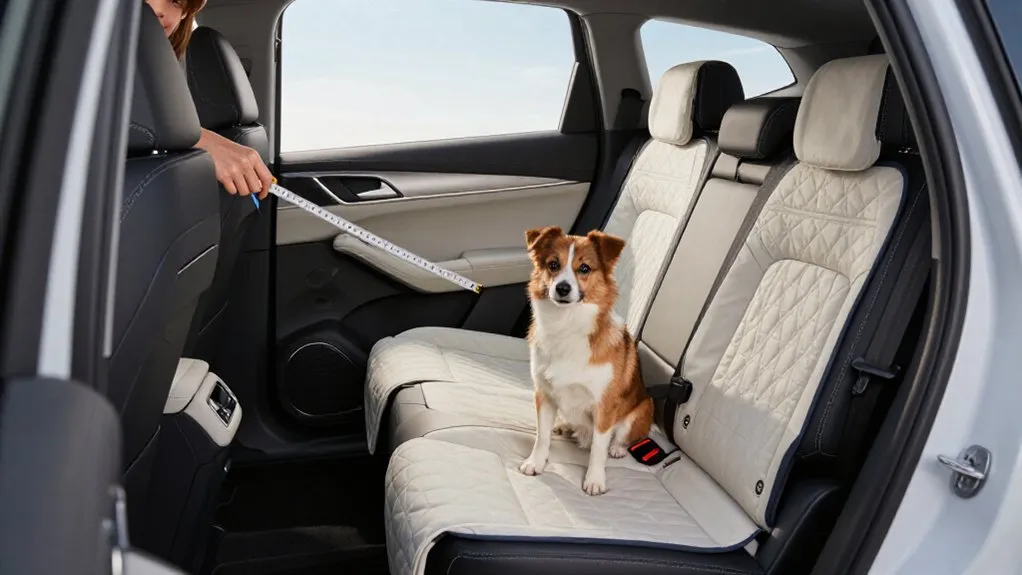
Measure your rear seat’s usable width, backrest height, and cushion depth, keeping the tape flat and excluding raised bolsters. Match those dimensions to the cover’s actual coverage, side flaps, and strap range; most bench covers run 54 to 60 inches wide.
Check headrest spacing, seat-belt buckle and LATCH access, and split-folding seams. Choose a hammock only if its front straps reach securely.
For an Outback, a full bench cover fits best. Then confirm attachment and fold-down details.
Measure Door-to-Door Seat Width
Start by measuring the usable width of the seat from one outer edge to the other, where the cover will actually rest. Use a flexible tape measure and run it straight across the seating surface, not over raised bolsters or into door pockets. Record the widest supported span between the areas that remain covered when doors close.
For a rear bench, measure from the left seating edge to the right seating edge; don’t assume the vehicle’s overall cabin width matches the cushion. Check whether trim, armrests, or a center console narrows the usable area. Compare your result with the cover’s stated coverage width, and choose a size that reaches the edges without bunching or blocking buckles. Allow two extra inches for side flaps during normal travel.
Measure Seatback Height
After confirming the seat’s usable width, measure seatback height to make sure the cover reaches from the top of the backrest to the cushion without leaving exposed upholstery.
Set the seat upright, remove occupants, and run a tape from the headrest base, or top upholstery, straight to the cushion seam. Record this backrest height. Then measure to the cushion’s front edge if the product’s listed length covers both surfaces. Check headrest gaps and measure outer and center positions on uneven split seats.
| Measure | Fit check |
|---|---|
| Backrest height | Top to cushion seam |
| Full vertical length | Top to cushion front edge |
| Headrest gap | Confirm strap clearance |
Compare your numbers to the size chart; confirm the cover won’t block seat belts or anchors before you buy for safe travel.
Hammock Versus Bench Covers
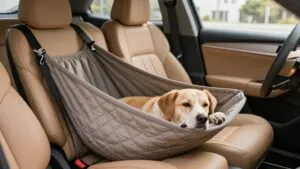
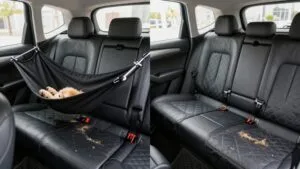
Choose a hammock cover when you want to protect both the rear bench and the front-seat backs while creating a contained riding area for your dog. Measure the distance from each rear headrest to the front headrests, since hammock straps need secure anchor points and enough reach without pulling tight. Also measure rear-seat depth and check whether the cover’s front panel will interfere with your center console or air vents.
Choose a bench cover if passengers frequently use the rear seat, you need easier access to footwells, or your vehicle lacks compatible front headrests. For either style, confirm headrest locations, seat-belt openings, split-seat seams, and side-flap clearance. A hammock should hang level, while a bench cover should lie flat across the cushion and seatback.
Typical Cover Widths: 54–60 Inches
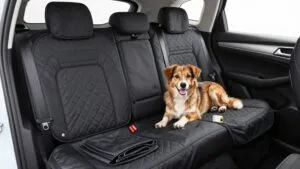
Most dog bench covers measure 54 to 60 inches wide, which fits many rear seats. Measure your seating span edge to edge, then check whether you need coverage that reaches toward both doors. Choose a little extra width for full bench protection and easier positioning, but avoid so much slack that the cover bunches.
Standard Width Range
A 54 to 60-inch-wide dog seat cover fits many standard rear bench seats, but you should measure your seat’s usable width from edge to edge before buying. This range usually suits sedans, crossovers, and many midsize SUVs, where rear benches commonly fall within similar dimensions. A 54-inch cover can work well when you want a neater fit on a narrower bench, while a 60-inch option provides more side-to-side upholstery coverage on wider seats.
Avoid assuming a larger cover is automatically better: excess material can bunch at the sides, shift under your dog, or interfere with a clean installation. Check the product’s stated width, including any side flaps, rather than relying on “universal” labeling. If your rear seat is near either end of the range, prioritize adjustable straps and non-slip backing.
Measuring Seat Span
Start by measuring the usable span of your rear seat from one outer seating edge to the other, keeping the tape along the seat cushion rather than across door panels or trim. Note where the upholstered seating surface ends, especially if bolsters curve upward at each side. Record the straight cushion-level measurement in inches.
Most universal rear-seat covers measure 54 to 60 inches wide, so compare your result with the product’s stated usable width, not just its package label. A 54-inch cover suits many sedans and compact SUVs; a 60-inch option gives broader benches more complete coverage. If your span falls near a size limit, choose the larger cover only when its straps and seams can still lie flat over the seat. Also note center contours and armrest seams.
Door-To-Door Coverage
For door-to-door protection, compare the cover’s stated width with the distance between the inner edges of your rear doors, not only the cushion span. Measure at the height where the cover’s side panels or door flaps will sit, keeping the tape level and following the cabin’s usable width. Typical wide covers measure 54 to 60 inches, but molded door panels, armrests, and narrow openings can reduce the practical space.
Leave enough clearance so the flaps lie flat instead of bunching against trim or interfering with door latches. If your measurement falls near a cover’s maximum width, check whether the brand lists flap dimensions separately. Wider isn’t automatically better: excess material can sag, shift, or trap debris near the sill. Also confirm straps keep side panels positioned.
Bench Seat Compatibility
Most rear bench-seat dog covers fit vehicles with seat cushions roughly 54 to 60 inches wide, but you should measure your usable cushion width from edge to edge before choosing one. Measure across the flat seating area, not the door panels or plastic trim. A 54-inch cover can suit a compact sedan, while 60-inch options commonly match wider SUVs and trucks.
Check whether your rear seat has pronounced bolsters, a fold-down armrest, or a 60/40 split. Choose a cover with appropriate seams, zippers, or cutouts so you can use seat belts, LATCH anchors, and folding sections. Also measure seat depth, backrest height, and headrest positions. Confirm the product’s strap layout works with your headrests and doesn’t block child-seat tether access during normal installation either.
Allowing Extra Material
Choose a cover slightly wider than your measured seat cushion so it can drape over the outer edges and stay positioned when your dog moves. Most universal rear-seat covers measure 54 to 60 inches wide, which suits sedans, crossovers, and SUVs. If your cushion measures 52 inches, a 54-inch cover provides enough edge coverage without bunching.
For a 58-inch cushion, choose a 60-inch or vehicle-specific option. Don’t use extra width as a substitute for straps: secure headrest loops, tuck anchors, and non-slip backing prevent shifting. Check that surplus fabric won’t block seat-belt buckles, LATCH anchors, or split-seat seams. A few inches of overhang protects exposed upholstery and side bolsters; too much material can wrinkle, collect debris, and interfere with folding seats.
Allow Clearance Around Buckles
Leave clear access to seat-belt buckles, LATCH anchors, and child-seat tether points when sizing and positioning a dog seat cover. Before ordering, locate each buckle receiver and anchor in your vehicle, then note whether it sits in the seat cushion, at the crease, or behind a flap. Choose a cover with belt slots, hook-and-loop openings, or seams placed where you can reach the hardware without stretching fabric.
After installation, press the cover and test openings. You should be able to click a seat belt into place, attach a harness tether, and reach anchors without lifting or bunching the cover. Don’t let straps, padding, or material cover buckle buttons. A snug, aligned cover protects upholstery while keeping restraint hardware visible, usable, and available when needed.
Accommodate Split-Folding Rear Seats
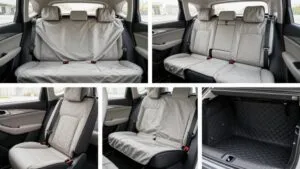
If your vehicle has 60/40 or 40/20/40 split-folding rear seats, measure each section and its seam locations before buying a cover. Record the width of every folding panel, the seat cushion depth, and the backrest height. Then measure from each split seam to the nearest outside edge, including the narrow center panel on 40/20/40 layouts.
Choose a cover with matching split zippers, hook-and-loop openings, or independently secured panels. A single solid bench cover can bunch, pull, or block a section from folding. Check that its openings align with seat-belt slots, LATCH anchors, and armrest pass-throughs. Install straps around the correct headrests, then test every seat section individually. You should be able to fold one portion down while the other seats stay secure and smooth.
Sizing a Subaru Outback
A Subaru Outback typically needs a full-size rear-bench cover rather than a bucket-seat model. Measure carefully the rear seating surface, edge to edge, then compare that number with the cover’s stated width, not just its package label. Many bench covers suit the Outback’s wide second row, but confirm that side flaps reach the seat edges.
Next, measure seat depth and backrest height. A cover that is too shallow leaves the front edge exposed, while one that is too short won’t protect the upper backrest. Choose a hammock or bench style with openings for seat belts and LATCH access. Because the Outback has split rear seating, select a split-compatible cover if you regularly fold one section down. For cargo travel, buy a separate cargo liner.
Check Headrest Attachment Spacing
Why check headrest spacing? A cover’s upper straps must reach and stay centered on your vehicle’s headrests. If the anchors sit too far apart, too close together, or fixed headrests, the cover can sag, shift, or leave side gaps.
- Measure the center-to-center distance between outer headrest posts or strap positions.
- Note each headrest’s width, height, and whether you can raise or remove it.
- Compare those numbers with the cover’s strap span and buckle adjustment range.
You should identify a middle headrest on three-position rear benches. Some hammock covers need three attachment points while others use only the outer pair. Check that straps won’t interfere with headrest-mounted screens, rear-facing tether routing, or a folding center armrest. Choose reinforced adjustable straps for a more secure fit.
Measure Seat Cushion Depth
After confirming headrest strap spacing, measure seat cushion depth from the base of the seatback to the front edge of the cushion. Keep the tape flat along the seating surface rather than pulling it over the front bolster, since that can overstate the usable footprint. Record the measurement and compare it with the cover’s stated seat-base depth.
- Match your measurement to the manufacturer’s maximum depth; a cover that’s too short leaves the cushion edge exposed.
- Allow extra length for thick bolsters or a hard-bottom extender, but don’t let excess fabric bunch under your dog.
- Check that the front anchors can reach beneath the cushion without interfering with seat tracks or passenger foot space.
This check helps you choose a stable cover with everyday protection.
Conclusion
Measure your rear seat before you buy, starting door to door across the seating area, then checking seatback height and cushion depth. Most dog seat covers run 54 to 60 inches wide, but you’ll need clearance for buckles, headrest straps, and split-folding sections. Choose a hammock or bench style based on how your dog rides. For vehicles like a Subaru Outback, confirm the cover’s dimensions against your actual measurements for a secure, usable fit every time.