Do Dog Cooling Vests Work? How Evaporative Vests Keep Dogs Cool
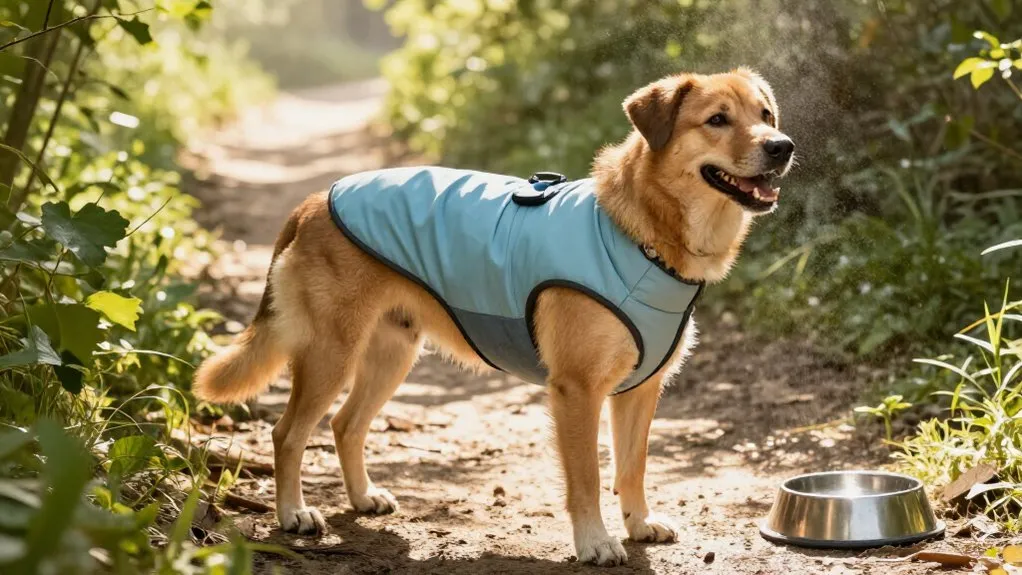
Dog cooling vests can give your dog short-term comfort, but they won’t make hot-weather exercise safe.
Water-activated PVA vests cool as moisture evaporates, drawing heat from the coat and skin. They work best in dry, breezy air and much less well in humidity or still conditions.
Soak and wring the vest, monitor panting and comfort, and remove it if your dog shivers, rubs, or seems distressed. The details below explain fit, recovery, and warning signs.
Water-Activated Vests Offer Temporary Relief
Water-activated cooling vests can give dogs short-term relief by using evaporation: as water in the fabric turns to vapor, it draws heat away from the covered skin. You soak the vest, wring it, and place it over your dog’s torso without limiting breathing, movement, or panting. Thermal-camera tests have reported surface-temperature reductions of 4–10°C under favorable conditions, but this doesn’t mean a vest prevents heatstroke.
Use it alongside shade, water, and rest breaks. Check your dog for heavy panting, drooling, weakness, confusion, and stop activity if signs appear. Remove the vest if your dog shivers, is uncomfortable, or develops rubbing or skin irritation.
Evaporation Needs Dry Air
Evaporative vests need dry air to work well: water must leave the fabric as vapor to carry heat away from your dog’s body. As liquid becomes vapor, it draws latent heat from the vest and nearby coat. Dry, moving air accepts that moisture; humid air doesn’t.
| Air condition | What you can expect |
|---|---|
| Low humidity | Faster evaporation and stronger cooling |
| Moderate humidity | Benefit falls; monitor your dog |
| High humidity | Little added cooling; don’t rely on it |
| Still air | Slow evaporation; increase airflow |
Tests find several degrees of local surface cooling under dry, ventilated conditions. But a vest cannot replace panting, shade, water, rest, or observation. Cooling declines above roughly 35% relative humidity. If your dog pants heavily, drools, seems weak, or appears disoriented, stop activity and move them to a cooler setting.
During 85°F Afternoon Walks
On an 85°F afternoon, a cooling vest may offer short-term relief during a walk, especially in dry air with a breeze, but it won’t make strenuous exercise safe. Keep your route short, choose shaded sidewalks, and let your dog set a slow pace. Offer water and stop often; the vest works best as heat management, not permission to continue when conditions worsen.
Watch your dog for heavy or noisy panting, drool, slowing, seeking shade, vomiting, weakness, or confusion. End the walk immediately if these signs appear, move to a cool area, and contact a veterinarian urgently for severe signs. Flat-faced, older, overweight, and heart or lung-compromised dogs need caution. Humid, still conditions can limit benefit, so consider postponing the walk.
Mesh, PVA, and Gel Vests
Mesh vests support airflow but offer limited cooling unless you pair them with shade, water, and rest. PVA vests cool through evaporation, so they work best in dry, breezy conditions and need regular re-wetting. Gel vests may provide longer cooling in humid or still air, but you should check for overheating, chafing, or signs your dog is becoming too cold.
Mesh Vests and Airflow
Although they all aim to reduce heat load, mesh, PVA, and gel cooling vests work differently. A mesh vest is usually lightweight and breathable, so it can improve airflow across your dog’s coat and reduce solar exposure if it has a light-colored or reflective outer surface. It doesn’t create meaningful cooling merely by covering the body; its value depends on ventilation and avoiding trapped heat.
Choose a snug, nonrestrictive fit that leaves the chest, shoulders, and abdomen free to move and doesn’t interfere with panting. Check beneath the vest during breaks: hot, damp skin, rubbing, or worsening panting means you should remove it and rest in shade. Mesh works best as one part of a heat-safety plan with water, shade, and frequent activity breaks.
PVA Vests and Evaporation
PVA cooling vests use a highly absorbent synthetic material that you soak in water, then fit snugly enough to contact the coat without limiting movement or panting. The material holds water while its exposed surface allows that water to evaporate. As water changes to vapor, it draws heat from the covered skin and coat.
You’ll see the strongest effect in hot, dry, breezy conditions; humidity and still air slow evaporation. Thermal imaging tests of evaporative products report surface-temperature reductions, but they don’t show that a vest prevents heatstroke. Wring the vest so it is wet, not dripping, and re-wet it when it dries. Check beneath it for rubbing or dampness. Stop activity, seek shade and water, and remove the vest if distress appears.
Gel Vests and Cooling
Gel cooling vests add a cold-retention layer to the benefits of fabric coverage, but they work differently from mesh or PVA evaporative designs. Instead, chilled gel inserts absorb heat by conduction, so they can provide temporary cooling even when humidity limits evaporation. Their performance depends on pack temperature, insulation, contact, and outdoor heat; they eventually warm to your dog’s body temperature and need re-chilling.
Use a vest with sealed, manufacturer-approved packs and a fabric barrier between the cold insert and skin. Check the fit: it shouldn’t restrict breathing, panting, or movement. Monitor your dog continuously and remove the vest for shivering, skin redness, discomfort, weakness, or increased panting. Never use damaged packs or treat a gel vest as protection against heatstroke. Add shade, water, rest.
Dog Size and Coat Thickness
Small dogs can cool quickly, so you should use a correctly sized vest and stop if you notice shivering or reluctance to move. A thick or dense coat may slow heat transfer from the skin, making evaporative vests less effective, especially in humid conditions. Make sure the vest fits the torso snugly without restricting breathing, panting, or movement.
Cooling Vests For Small Dogs
Although cooling vests can help dogs of any size, small dogs need closer monitoring because they can cool down quickly, especially when they’re sedentary or exposed to wind.
Choose a lightweight, well-fitted vest that contacts the torso without limiting breathing, movement, or panting. For very small dogs, start with brief wear periods and check them every few minutes. Remove the vest if your dog shivers, seems reluctant to walk, tucks their body, or appears uncomfortable.
A damp vest can cool a small, inactive dog faster than expected, particularly in breezy conditions. Keep rest breaks available in shade, offer water, and don’t use the vest in cool weather. If your dog is a puppy, senior, brachycephalic, or has heart or lung disease, ask your veterinarian.
Thick Coats And Evaporation
A thick or double coat can slow the transfer of cooling from a damp vest to your dog’s skin, so the vest may lower surface temperature more than core heat load. Dense undercoat traps air, which insulates against both environmental heat and cooling from wet fabric. You may still see benefit in dry, breezy conditions because airflow speeds evaporation at the coat’s outer layers, but the effect can be short-lived.
Don’t use a cooler-feeling coat as proof that your dog is safe to continue exercising. Watch panting recovery, drooling, gum color, weakness, and behavior; stop, seek shade, water, and rest at first concern. High humidity further limits evaporation. For coated, brachycephalic, older, overweight, or dogs with heart or lung disease, ask your veterinarian.
Proper Fit By Size
Fit determines whether a cooling vest can help without creating new risks: it should lie snugly over the torso, including the chest and back, while leaving the neck, shoulders, legs, and ribcage free for normal movement and unrestricted panting. Measure your dog’s chest girth and back length, then use the maker’s chart rather than weight alone. You should slide two fingers beneath straps; looseness traps wet fabric, while compression can impair chest excursion or chafe.
| Build | Fit focus |
|---|---|
| Small or lean | Check for shivering; avoid prolonged wetness. |
| Large or thick-coated | Confirm torso contact without tightening. |
Dense coats may slow transfer from skin, so inspect beneath the vest for heat, dampness, or irritation. Remove it if panting worsens, movement changes, or your dog seems distressed.
Post-Hike Shade Recovery
After a hike, move your dog into shade, offer cool drinking water, and let their breathing return toward normal before continuing activity or travel. Recovery matters because exercise, sun exposure, and warm ground can leave body heat elevated even when a damp vest has lowered skin-surface temperature. Stop in a ventilated, shaded area and watch for persistent rapid panting, heavy drooling, bright-red or pale gums, weakness, vomiting, confusion, or collapse.
These signs can indicate heat stress and require prompt veterinary advice; collapse, altered awareness, or breathing difficulty warrants emergency care. Don’t assume a vest can offset dangerous heat or humidity. If your dog seems uncomfortable, end the outing, cool them gradually with shade, airflow, and water access, and avoid forcing drinking. Seek veterinary guidance.
Never Leave Vests On Unattended
Never leave a cooling vest on an unattended dog, because you can’t monitor whether it’s helping or creating problems. A damp, snug garment can shift, bunch, or trap moisture against your dog’s skin while you’re away. You can’t check breathing freedom, gait, comfort, or whether evaporation has slowed in still, humid air. Remove the vest before crating, leaving home, or allowing unsupervised rest.
| What you might see | What you should do |
|---|---|
| Fur rubbed pink beneath a damp edge | Remove it, dry the skin, and reassess fit. |
| Shivering, stiffness, or reluctance to move | Take it off and warm your dog gradually. |
Inspect under straps and around the chest after each use. Dry it fully between outings. Call your veterinarian for broken skin or swelling promptly.
Vests Cannot Prevent Heatstroke
A cooling vest can lower the temperature of the covered skin, but it can’t prevent heatstroke or make unsafe heat safe. Evaporation cools locally and works best in dry, moving air; humidity, still conditions, sun, exertion, and individual risk factors can overwhelm its benefit. Treat the vest as comfort support, not protective equipment.
- Plan walks for cooler hours and choose shaded routes.
- Provide frequent rest, drinking water, and airflow.
- End activity immediately if you see heavy panting, drooling, weakness, vomiting, confusion, or collapse.
- Move your dog to a cool area and seek urgent veterinary advice for suspected heat illness.
Higher-risk dogs may overheat faster. A vest doesn’t extend safe exercise limits during heatwaves or humid weather; stop based on your dog’s condition promptly.
Check Gum Color Afterward
Once your dog has cooled down and rested, check its gums: they should look moist and bubblegum pink, not pale, gray, blue-tinged, brick red, or tacky. Press a finger gently against the gumline until it blanches, then release. Healthy color should return within about two seconds.
Delayed refill, abnormal color, continued heavy panting, vomiting, weakness, collapse, confusion, or an inability to settle can signal heat-related illness or poor circulation. Move your dog to air-conditioning or a shaded, well-ventilated area, offer small amounts of cool water, and contact a veterinarian immediately.
Don’t force water or use ice-cold baths, which can worsen distress. A cooling vest may lower surface temperature, but normal gums and behavior remain essential checks after any heat exposure, especially during warm-weather activity.
Conclusion
Cooling vests can give your dog short-term comfort by using evaporation, especially in dry air, but they won’t make hot-weather exercise safe. Choose a well-fitted vest for your dog’s coat and size, rewet it as directed, and use it with shade, water, and rest. Remove it when you can’t supervise. After walks, check breathing, behavior, and gum color. If heat-stress signs appear, stop activity, cool your dog, and contact a veterinarian without delay for urgent advice.