How to Keep a Dog Hydrated on a Road Trip Without Spills or Overdrinking
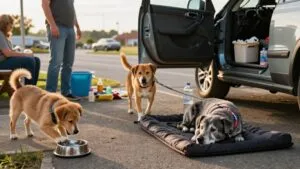
Plan hydration stops about every two hours, more often in heat or for puppies, seniors, and brachycephalic dogs.
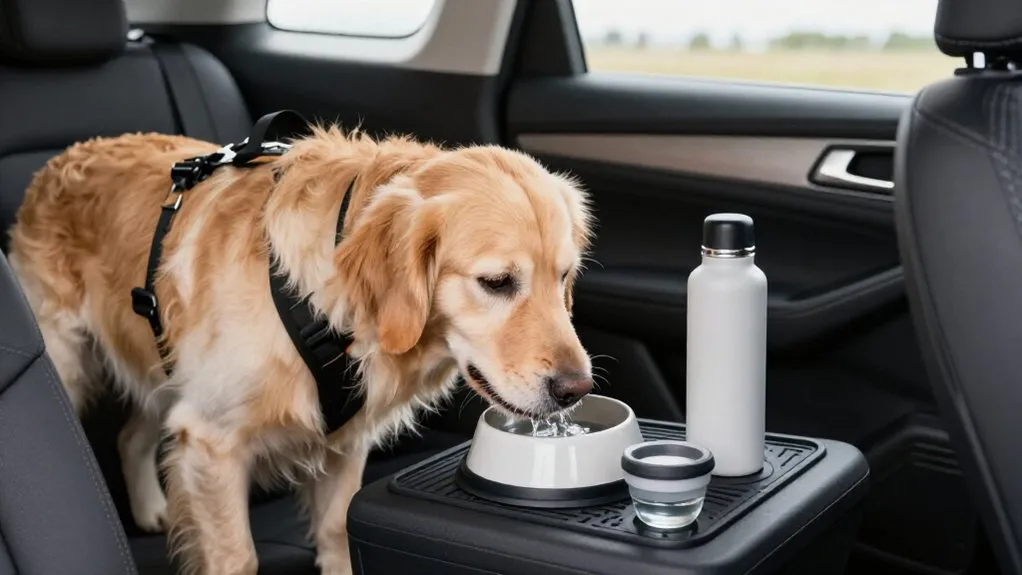
Park on level ground, then offer 4 ounces (120 mL) from a nonspill bowl or bottle attachment; don’t provide water while driving.
Let your dog pause before refilling, and stop if it gulps, coughs, or vomits.
Cap and towel-dry the bowl afterward.
Check for moist, pink gums, pale-yellow urine, and urination.
Continue for spill-control and refusal strategies.
Hydration Stops Every Two Hours
Plan a hydration and bathroom stop about every two hours, adjusting toward more frequent breaks for puppies, senior dogs, brachycephalic breeds, hot weather, or active travel days. Offer small measured amounts of water at each stop rather than allowing prolonged unrestricted drinking. This approach supports intake while reducing vomiting and excessive water consumption. Aim near the upper end of normal daily needs, about 50 mL/kg/day, when heat, exertion, or travel stress increases losses. Provide a meal and water three to four hours before departure if motion sickness is a concern. Watch for pale-yellow urine, urination, moist gums, and prompt skin return after gentle tenting. Thick saliva, reduced urination, vomiting, diarrhea, weakness, or persistent skin tenting can indicate dehydration or illness; contact a veterinarian promptly if concerned.
Pack a Nonspill Bowl
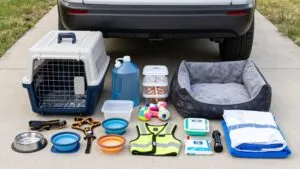
A nonspill travel bowl lets you offer controlled, hygienic water without soaking the car or leaving a full bowl available for gulping. Choose capacity for your dog’s size and the interval between stops; serve small, measured portions, not unrestricted water.
- Use a bottle-with-attached-bowl design for one-handed delivery and minimal standing water.
- Choose stainless steel when practical: its nonporous surface is easier to sanitize and resists odor retention.
- For crate or floor use, select a rigid spill-lip bowl and secure it on a clean, level surface.
Rinse after each use and inspect plastic or silicone for cracks, odor, or wear. A detachable bowl can still spill, so don’t leave it filled while driving. For larger dogs, carry multiple refills rather than oversizing.
Step 1: Use Ice Cubes for Sipping
Ice cubes can help some dogs take small, controlled amounts of water during hot stops or after mild activity, but they don’t replace regular water offerings. Use plain ice made from the same safe drinking water you provide, and offer one or two small cubes only when your dog is awake, seated, and supervised. Crush large cubes or use tiny pieces for small dogs, seniors, brachycephalic breeds, or dogs that gulp, because hard or oversized pieces can pose a choking or dental-injury risk.
Don’t give ice to a dog that is vomiting, coughing, struggling to swallow, or showing distress. Stop and contact a veterinarian if signs persist. At each scheduled break, still offer fresh liquid water and watch for normal swallowing and comfortable behavior.
Step 2: Measure Water Before Departure
Before you leave, measure the water you’ll carry and track what you offer rather than relying on an always-full bowl. Estimate your dog’s daily requirement at roughly 25 to 60 ml per kilogram of body weight, using the higher end during heat, activity, or travel stress. For many road trips, aim near 50 ml/kg/day, then adjust for weather, trip length, and your veterinarian’s guidance.
Bring a measured reserve in marked bottles, plus enough for expected stops and a safety margin. Puppies, working dogs, seniors, brachycephalic dogs, and overweight dogs may need closer monitoring. Record each amount offered and any water left. Small, measured portions help prevent rapid intake and make changes easier to recognize. Watch for pale-yellow urine and normal urination; call your veterinarian for changes.
Step 3: Park on Level Ground First
Once you’ve parked, choose level ground before offering water so the bowl remains stable and your dog can drink without chasing spills or slipping. An angled shoulder, curb, or uneven trail can tip a lightweight vessel, contaminate the water, and create a slip hazard. Set the bowl on firm, shaded pavement or soil, away from traffic, exhaust, and loose gravel. Secure the vehicle, attach your dog’s leash, and let them settle after exiting before you present the bowl.
Check that the container sits flat and doesn’t rock when your dog nudges it. Use a nonslip mat or suction-base travel bowl if the surface is smooth. Keep water outside the vehicle; a moving or idling car increases spill and heat risks. If stable ground isn’t available, hold the container securely.
Step 4: Serve Four-Ounce Portions
With the bowl stable on level ground, offer about 4 ounces (120 mL) of water at a time, then pause to see whether your dog drinks comfortably and shows no nausea. This measured amount helps you distribute fluids across planned stops instead of allowing unrestricted intake. Refill only after the brief pause, adjusting frequency for body size, heat, activity, age, and medical conditions.
Use a clean, marked travel bowl or bottle to keep portions consistent and record amounts offered if your dog has illness, vomiting, or unusual thirst. Aim to meet its overall daily needs through repeated offerings, not one large volume. Check for pale-yellow urine, normal urination, moist gums, and normal behavior during breaks. Contact a veterinarian promptly for persistent vomiting, lethargy, or dehydration.
Step 5: Watch for Gulping or Coughing
Watch your dog as it drinks for rapid gulping, coughing, choking, repeated swallowing, or water coming back up. These signs can indicate that flow is too fast, nausea, airway irritation, or impaired swallowing. Pause the drink immediately and let your dog stand quietly with its head in a natural position. Don’t encourage more water until breathing is normal and coughing has stopped.
At the next offering, provide a smaller measured amount and observe each swallow. If coughing, choking, repeated regurgitation, labored breathing, blue or pale gums, weakness, abdominal swelling, or persistent vomiting occurs, contact a veterinarian urgently. Recurrent difficulty drinking warrants prompt veterinary assessment, particularly in brachycephalic, senior, or neurologically affected dogs. Note timing, amount consumed, and associated signs to give your clinic details.
Step 6: Cap and Towel-Dry Bowl
After your dog finishes a measured drink, cap the water container immediately and towel-dry the bowl before returning to the vehicle. This limits sloshing, reduces unplanned drinking, and prevents residual water soaking bedding and surfaces. Empty remaining water rather than leaving a full bowl within reach during travel.
Moist, dirty surfaces can support bacterial buildup, so use a clean towel reserved for pet equipment and rinse the bowl after use. At next stop, refill with cool, filtered or bottled water and offer another controlled portion. Store capped container upright in an insulated carrier or secured compartment. Check cap for leaks before driving. If water spills on harnesses, bedding, or flooring, dry it promptly; damp materials can become slippery and may retain contamination during transit.
Confirm Moist, Pink Gums
At each rest stop, check that your dog’s gums look pink and feel moist, which supports adequate circulation and hydration. Lift the lip gently and inspect the gum tissue in good light. Healthy gums are generally salmon-pink and slick, not tacky or dry.
Press a fingertip briefly against the gum, then release; normal color should return within about two seconds. Pale, white, blue-tinged, brick-red, sticky, or persistently dry gums can signal dehydration, poor perfusion, overheating, or another urgent condition. Record any change alongside water offered, urination, vomiting, or diarrhea.
Give small, measured water portions rather than allowing rapid gulping. If abnormal gums persist after cooling and a brief rest, or occur with weakness, collapse, repeated vomiting, or labored breathing, contact an emergency veterinarian promptly.
Highway Noise Causes Water Refusal
Even with normal, moist gums, highway noise and vibration can make some dogs too anxious to drink. Offer small, measured sips during planned stops, not while the vehicle is moving. Move your dog to a quiet, shaded area and allow several minutes to decompress before presenting familiar water.
| Observation | Safer response |
|---|---|
| Ears pinned, panting | Pause in quiet shade |
| Turns away repeatedly | Reoffer at next stop |
Track urine output and color; pale-yellow urine supports adequate intake. Don’t force water or permit a large catch-up drink, because distress and rapid intake can trigger vomiting. If refusal persists through two scheduled stops, or you see thick saliva, reduced urination, weakness, vomiting, or skin tenting, call a veterinarian promptly. Keep your route clinic contacts available and prevent heat exposure.
Rinse Bowl at Destination
Once you arrive, rinse your dog’s bowl with clean water and empty any leftover water before offering a fresh portion. This removes saliva, food residue, and warmed standing water that can support bacterial growth during travel. Use bottled or filtered water, especially if you’re uncertain about local water quality, and avoid shared outdoor bowls.
Offer a measured, small serving after your dog has settled, then refill only as needed. This limits gulping, vomiting, and unnecessary spills while still supporting recovery from travel. Wash the bowl with mild soap and a brush when available; rinse thoroughly so detergent doesn’t remain. Check that your dog urinates and has moist gums and pale-yellow urine. Contact a veterinarian promptly if you notice vomiting, lethargy, saliva, diarrhea, or decreased urination.
Conclusion
Keep your dog hydrated by offering measured water every two hours, using a stable nonspill bowl on level ground. Let them sip ice cubes if road noise reduces drinking, and don’t force large amounts.
Cap the bowl between stops and towel-dry it to prevent spills. Check that gums stay moist and pink; contact a veterinarian if they become dry, tacky, pale, or your dog seems unwell. Rinse the bowl at your destination to reduce contamination.