Dog Car Seat vs Harness: Which Keeps a Small Dog Safer?
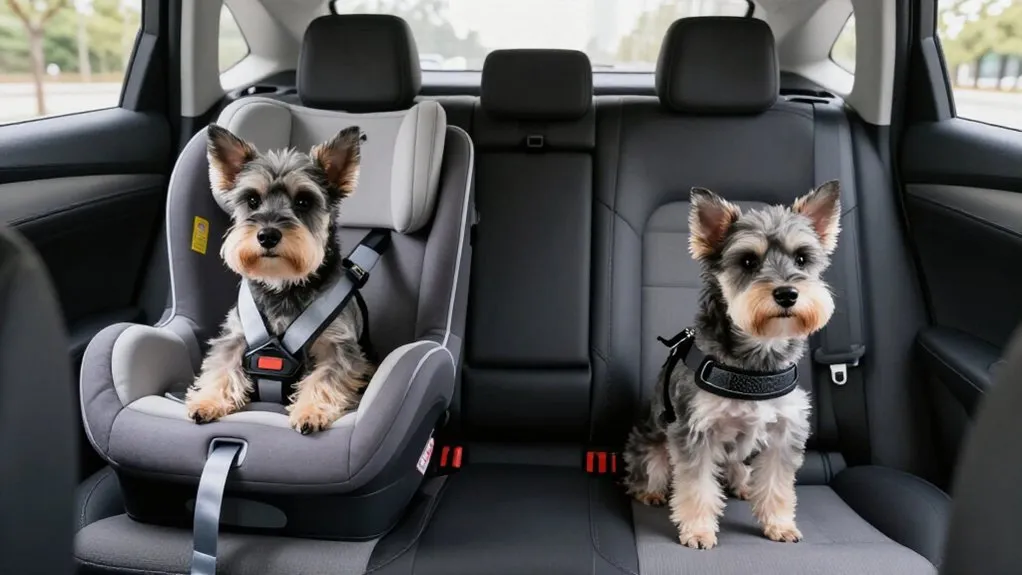
For most small dogs, you’ll get stronger crash-protection evidence from a properly fitted, independently crash-tested full-body harness secured in the rear seat than from a typical booster-style car seat. Attach it only at its designated point, keep tether slack minimal, and never use a collar.
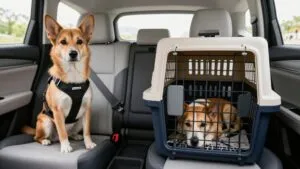
A rigid, independently tested carrier can also work if it’s correctly anchored. Keep your dog out of front-airbag zones. The sections below compare fit, side-impact control, comfort, and setup needs.
Crash-Test Ratings Compared
Crash-test ratings distinguish restraints that have demonstrated protection under defined impact conditions from products that merely claim to be “tested.” For small dogs, independently certified full-body harnesses and properly secured rigid crates generally provide stronger evidence of occupant retention and force management than booster seats or soft carriers.
| Restraint | Evidence |
|---|---|
| Certified harness/rigid crate | Stronger standardized evidence |
| Booster/soft carrier | Often limited independent evidence |
Check whether the rating reflects independent standardized sled testing rather than a manufacturer claim. Certified harnesses can reduce forward movement and hardware failure; rigid crates can preserve a protective enclosure. Boosters may improve stability, but typically lack comparable evidence.
Soft carriers can deform. No restraint eliminates injury, and results mostly rely on dummies rather than real-world outcome datasets during collisions under test.
Attachment Points and Restraint Paths
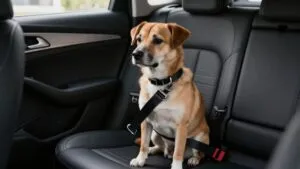
A restraint’s crash-test performance only applies when you attach it through the intended path and to a suitable vehicle anchor. For a harness, route the vehicle belt or approved tether exactly as the manufacturer specifies, then connect it to the harness’s designated attachment point—not a collar, leash ring, or improvised clip. Adjust the tether so your dog can sit or lie comfortably but cannot reach the front seatback; excess slack increases forward excursion and loading.
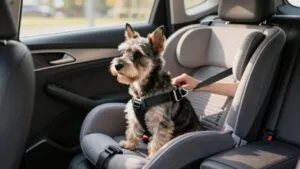
For a car seat, distinguish the seat’s mounting straps from the dog’s restraint. Secure the seat to the vehicle seat belt or approved lower anchors when instructions permit, and restrain your dog with a compatible, full-body harness. Before each trip, confirm buckles latch, webbing isn’t twisted, and harness fits snugly.
Side-Impact Containment Performance
Side impacts demand containment that keeps your dog from sliding across the cabin or striking a door, window, or seat structure. A raised car seat can confine a small dog, but its protective value depends on a rigid shell, strong sidewalls, and independent crash-test evidence. Most booster-style seats lack Center for Pet Safety approval, so you shouldn’t assume their straps or padded walls manage lateral crash loads. A crash-tested, full-body harness restrains torso motion better than a collar tether, yet a single attachment point can still allow sideways excursion toward the door.
Test data on pet restraints remain limited and rely largely on dummies rather than real-world injury registries. Prioritize independently tested systems that limit lateral travel away from intrusion zones.
Buckle-Up Steps and Setup Time
Three checks make buckle-up routine safer: fit the restraint, secure it to the vehicle, and remove excess slack. Before every trip, place your dog in the rear seat and inspect the harness or booster for damage, twists, or loose hardware. Adjust the full-body harness snugly according to its instructions; don’t attach a tether to a collar.
With a harness, route the vehicle belt exactly as the manufacturer specifies, then lock the buckle and pull the tether short enough to prevent contact with the front seatback. With a car seat, fasten its base to the seat belt or approved anchors before clipping your dog’s harness in place. Don’t rely on built-in booster straps unless independent crash testing supports them. Allow time for a final check.
Flat-Faced Breed Fit
Flat-faced dogs, including Pugs, French Bulldogs, and Bulldogs, need restraints that protect their airway as well as limit movement. Because brachycephalic dogs may have narrowed nostrils and upper-airway tissue crowding, you shouldn’t use a collar tether or any setup that pulls the neck forward. Choose a correctly fitted full-body harness that loads the chest and torso, then attach it with minimal slack in the rear seat.
Check that straps don’t compress the throat when your dog sits, turns, or braces. A well-ventilated, securely anchored carrier may suit dogs that become distressed or breathe noisily in a harness. Never place your dog in front of an active airbag. During travel, watch for increased effort, open-mouth breathing, blue gums, or agitation; stop and seek veterinary care.
Washable Cover Replacement Costs
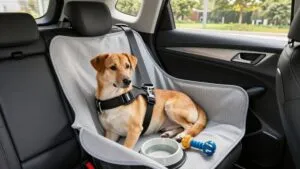
A washable cover can lower the long-term cost of a dog car seat by simplifying cleanup after mud, shedding, motion sickness, or accidents, but it doesn’t improve crash protection on its own.
Before buying, confirm that the manufacturer sells a replacement cover, lists its price, and identifies washing limits. A cover is a hygiene and maintenance feature; the seat’s frame, anchors, tether, and compatible harness determine restraint performance. Compare:
- Replacement-cover price versus a new seat; frequent laundering can justify a higher initial purchase.
- Whether removal exposes or weakens any restraint-routing components.
- Care instructions: use approved cycles and air-drying methods to prevent shrinkage or attachment damage.
Replace torn covers promptly, but don’t assume cleanliness compensates for weak hardware or an incorrectly fitted harness system.
Airbag Deployment Zone Hazards
Because front airbags deploy with substantial force, you shouldn’t place a dog in the front passenger seat, even when it’s restrained. Airbag inflation can strike a small dog before its restraint fully limits movement, causing severe blunt-force injury to the head, neck, chest, or abdomen.
Put your dog in the rear seat, ideally away from side-curtain deployment paths and loose cargo. A booster may position a dog higher, increasing proximity to vehicle structures; it doesn’t make front-seat placement safe. Choose a restraint using independent crash-test evidence: a correctly fitted full-body harness attached to the seat belt, or a securely anchored crate. Check tether length and anchor routing before every trip so your dog can’t reach the front seatback or dashboard. Keep it rearward.
Motion Sickness and Stability
You can reduce motion-related distress by limiting your dog’s movement with a correctly fitted restraint. A secured crate often provides the most stable enclosure, while a booster seat may improve comfort for small dogs but doesn’t establish crash protection on its own. Choose a back-seat system your dog tolerates, secure it correctly, and introduce it through short practice trips.
Reducing Motion Sickness
Motion sickness often worsens when a dog shifts, slides, or braces against repeated vehicle movement. A car seat or harness may help only if your dog tolerates it calmly; neither replaces veterinary assessment for persistent nausea. Introduce the restraint gradually during parked sessions, then brief drives, so you can identify distress without forcing prolonged exposure.
- Watch for drooling, lip-licking, yawning, retching, or restlessness; stop safely if signs escalate.
- Avoid a large meal for several hours before travel, while maintaining access to water at stops.
- Ask your veterinarian about anti-nausea medication when training and routine measures aren’t enough.
Fresh air and a cool, quiet cabin can reduce sensory triggers. Never give human medications unless your veterinarian directs you; dosage and contraindications vary by dog considerably.
Improving Ride Stability
How securely your dog rides affects stability during braking, turns, and uneven roads. A correctly fitted full-body harness limits side-to-side shifting when its tether has minimal slack and attaches to the vehicle belt. This control can help your dog maintain a stable posture, but it doesn’t provide the elevated view some small dogs find calming.
A well-anchored booster can reduce sliding and give your dog a predictable position, which may lessen balance-related distress. Yet booster straps alone often lack independent crash-test validation. Use the booster only with a properly fitted crash-tested harness secured in the rear seat.
Check attachment points and restraint routing before every trip. Keep bedding thin and secured, and don’t lengthen the tether for comfort. Excess movement increases instability and worsen nausea.
Cargo-Space Needs for Small Dogs
You’ll need enough cargo room to place a crate level, stable, and securely anchored without crowding your small dog. Evaluate rear-cargo versus back-seat crate placement based on available tie-down points and crash protection. Secure bedding, supplies, and other travel essentials so they can’t shift or become projectiles during sudden braking.
Cargo Room Requirements
For small dogs, cargo-space needs depend less on body size than on the restraint system’s footprint and secure installation. A harness typically preserves usable cargo volume because it uses the vehicle’s seating area, while a carrier or booster occupies a defined surface and may require extra clearance for stable attachment. Don’t choose by dimensions alone; crash performance, anchor compatibility, and restraint travel limits matter more.
- Measure the installed product, not just your dog.
- Keep tether hardware and buckle paths unobstructed.
- Remove loose cargo that could strike the restraint during sudden deceleration.
You should retain enough open space to inspect connectors before every trip and to prevent bags from compressing or destabilizing the system. A compact setup is only safer when securely installed and properly adjusted.
Crate Placement Options
Once you’ve measured the restraint footprint, choose a crate location that keeps it stable, anchored, and clear of loose cargo. For most small dogs, the rear seating area offers better protection from front-airbag and dashboard forces than the front passenger seat. A crate may fit on a level rear bench only if its base remains fully supported and its dimensions do not interfere with seat geometry.
In an SUV, wagon, or hatchback, use the cargo area only when the crate can sit flat, remain behind a protective barrier, and use vehicle-specific tie-down points. Avoid placing it in a crumple zone, on folded or uneven surfaces, or where it blocks your rearward visibility. Keep the crate oriented as its manufacturer directs. Use independently tested crates.
Securing Travel Essentials
Secure every travel essential in the cargo area before departure, because loose bowls, bags, leashes, bedding, and toys can become projectiles during sudden braking or a collision. Cargo management also protects the restraint system: an object can strike a carrier, interfere with a tether, or block an emergency exit. Use enclosed bins, cargo anchors, or a fitted barrier, and keep supplies away from your dog’s crate or rear-seat position.
- Place water and food in sealed, rigid containers.
- Fasten luggage to factory cargo tie-down points.
- Store medications and cleaning supplies where you can reach them safely.
Don’t pack items on top of a crate or beside a harnessed dog; added mass may shift forward and increase contact forces during abrupt vehicle deceleration or a crash.
Choose by Dog Weight
Your dog’s weight is a practical starting point, but it shouldn’t be the only criterion for choosing a car restraint. Small dogs may fit boosters, but most booster straps lack independent crash-test approval. Choose a restraint rated for your dog’s current weight and chest girth, then confirm its attachment method matches your vehicle. A properly fitted, crash-tested full-body harness can distribute forces across the torso and limit forward travel.
For very small dogs, a correctly sized, securely anchored carrier or crate may offer containment, yet it mustn’t shift during braking. Avoid collar tethers, which concentrate load at the neck. Keep the restraint in the rear seat, minimize tether slack, and recheck fit after weight changes, grooming, or growth. Favor independently tested products.
Conclusion
For a small dog, you’ll usually gain protection from a crash-tested restraint matched to its weight, vehicle, and travel position. Choose a seat when it provides tested containment and a short, correctly routed tether; choose a harness when it has verified crash performance and avoids airbag zones. Don’t rely on untested boosters or single-point attachments. Secure the system on every trip, check fit regularly, and place your dog in the rear seat whenever possible.