How Hot Does a Car Get for a Dog? Temperatures Rise Faster Than You Think
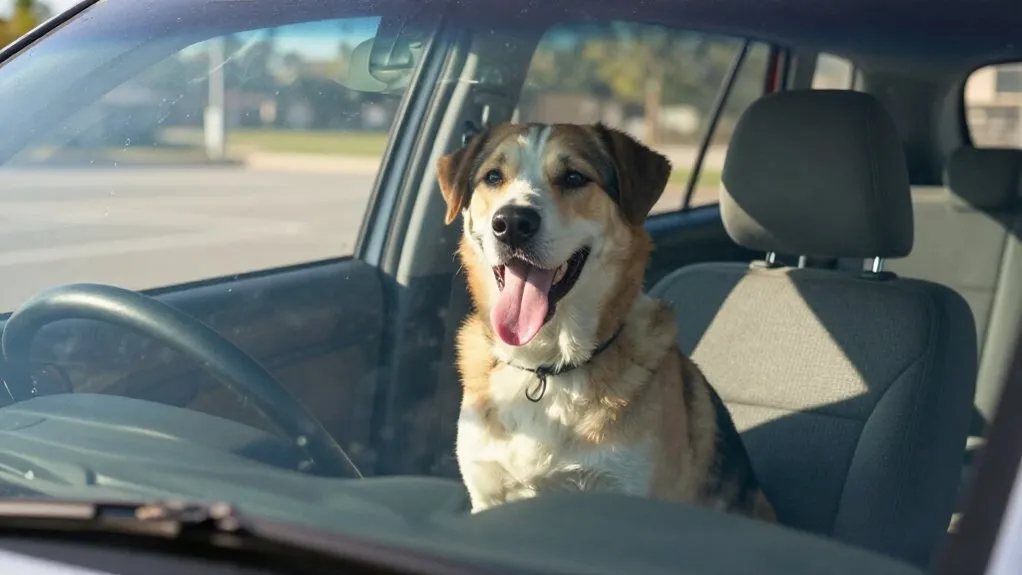
A parked car can heat by 20°F in 10 minutes and exceed 120°F, putting your dog at risk of heatstroke. At 80°F outside, cabin temperatures may reach 99°F in 10 minutes and 109°F in 20. Shade, cracked windows, sunshades, and water don’t make it safe.
You should never leave your dog unattended; check every seat before locking. If you see distress, call 911 and seek urgent veterinary care. Learn warning signs and response steps below.
Cabins Can Exceed 120°F
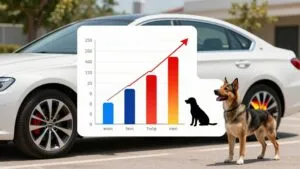
A parked car can become lethal for a dog far faster than most people expect: cabin temperatures may rise nearly 20°F (11°C) in the first 10 minutes, even with a window cracked. On an 80°F (27°C) day, you can see approximately 99°F (37°C) after 10 minutes and 109°F (43°C) after 20. Under sustained sun, cabins may surpass 120°F (49°C), including when outdoor air seems mild.
Solar radiation passes through glass, then trapped heat accumulates; asphalt, dark interiors, small cabins, and afternoon exposure increase the load. A cracked window or sunshade doesn’t provide reliable cooling. Don’t use shade, ventilation, or a short errand as safeguards. Take your dog with you only when it can remain in an air-conditioned space, or leave it safely at home.
Dogs Overheat Within Minutes
Those extreme cabin temperatures can push a dog from normal thermoregulation into heatstroke within minutes. A dog’s normal body temperature is 101 to 102.5°F, but temperatures of 107 to 108°F can trigger life-threatening heatstroke, brain injury, and death.
Unlike you, dogs cool themselves mainly by panting; they sweat only minimally through their paw pads. As trapped air heats, panting becomes ineffective, particularly in humid conditions. Heart rate rises, fluid and electrolyte losses mount, and blood pressure can fall, reducing oxygen delivery to essential organs.
You may first see frantic panting, drooling, restlessness, or attempts to press against doors. Soon, weakness, vomiting, staggering, collapse, seizures, or unconsciousness may follow. Puppies, senior, obese, ill, dehydrated, thick-coated, and short-nosed dogs can decline fastest. Never leave your dog unattended in parked vehicle.
Shade Doesn’t Prevent Dangerous Heat
Shade can slow direct solar heating, but it doesn’t keep a parked car safe for a dog. Your vehicle still traps warmed air, while heat radiates from glass, seats, dashboard, and pavement. Shade shifts the rate of heating; it doesn’t create a safe internal temperature or restore your dog’s ability to cool itself by panting.
| Condition | What happens | Safety implication |
|---|---|---|
| Shade on 80°F day | Cabin heat still accumulates | Heat injury remains possible |
| Dark interior | Surfaces absorb heat | Temperature may rise faster |
| Humid conditions | Panting cools less effectively | Risk escalates quickly |
Don’t use shade as a safety measure for an unattended dog. Parked-car heat can cause dehydration, heatstroke, organ injury, and collapse before you return. Bring your dog with you, or leave it at home.
Cracked Windows Offer Little Relief
Cracking a window provides limited air circulation and doesn’t stop solar heat from accumulating inside the vehicle. Interior temperatures can still rise nearly 20°F within 10 minutes, placing your dog at risk of heatstroke. Don’t mistake slight ventilation for a safe condition; leave your dog out of an unattended car.
Limited Air Circulation
Even with the windows cracked, a parked car retains heat rapidly because the small opening doesn’t provide enough airflow to offset solar heating. Air exchange remains limited when doors stay shut and the vehicle is stationary. Sunlight warms interior surfaces, which then release heat into the cabin air.
Without powered ventilation, fresh air doesn’t move through the vehicle at a rate that supports cooling. Your dog may pant harder as warm, humid air accumulates around its body. Panting depends on evaporation from the airways, and stagnant air impairs that process.
Heat stress can progress quickly, especially for short-nosed, older, overweight, or ill dogs. Don’t leave your dog unattended; take it with you or leave it safely at home with reliable climate control instead, when possible.
Minimal Temperature Reduction
A cracked window does little to lower a parked car’s dangerous interior temperature. It can’t offset solar radiation entering through glass or heat trapped by the vehicle’s enclosed surfaces. Evidence cited by public-health agencies shows cabin temperatures can rise nearly 20°F in the first 10 minutes even when windows are slightly open. On an 80°F day, that can bring the interior to about 99°F within 10 minutes and 109°F within 20.
The small opening doesn’t create enough airflow to remove heat as it accumulates. Your dog faces ambient heat while panting becomes less effective in humid conditions. Sunshades reduce exposure but don’t prevent hazardous heating. For protection, you must keep your dog out of an unattended vehicle whenever temperatures are warm or moderate.
False Sense Of Safety
A partially open window can create a false sense of security, but it does not provide enough ventilation to protect a dog in a parked car. Heat enters through the glass, becomes trapped, and raises cabin temperature rapidly even when outside air feels moderate. A narrow opening cannot exchange air fast enough to offset that heat gain.
| Condition | Expected result |
|---|---|
| 80°F outside | About 99°F inside after 10 minutes |
| Cracked window | Minimal temperature reduction |
| Direct sun | Faster heating and greater risk |
Your dog cools mainly by panting, which becomes ineffective as cabin heat and humidity rise. Older, overweight, and short-nosed dogs deteriorate especially quickly. Don’t rely on shade, a sunshade, or a brief errand. Take your dog with you or leave them safely at home.
Humidity Slows Canine Cooling
In humid conditions, your dog can’t cool efficiently because panting depends on evaporation from the respiratory tract. As humidity rises, evaporation slows, even if the car’s temperature seems only moderately high. Heat stress can then escalate quickly, so don’t leave your dog in a parked vehicle.
Humidity Limits Panting
Humidity makes a hot car far more dangerous because it limits evaporation from your dog’s tongue and airways, the mechanism that makes panting work. When cabin air already holds substantial moisture, panting cannot transfer body heat as efficiently. Your dog may pant harder and faster, yet its core temperature can continue rising quickly.
Don’t judge safety by outdoor temperature: warm, humid conditions reduce your dog’s reserve as vehicle temperatures climb. Short-nosed, older, obese, or heart- or airway-compromised dogs may deteriorate quickly. Treat heavy or noisy panting, thick drool, weakness, vomiting, disorientation, or collapse as emergencies. Never leave your dog in a parked car. If distress occurs, move your dog to a cooler area, start gradual cooling with cool water, and seek urgent veterinary care.
Evaporation Becomes Less Effective
As cabin humidity rises, evaporation from your dog’s tongue and respiratory tract slows, so panting removes less heat from the body. Humid air already contains more water vapor, reducing the vapor pressure gradient that transfers moisture from your dog’s wet oral and airway surfaces into the surrounding air. Each breath consequently provides less evaporative cooling even when your dog pants rapidly.
A closed vehicle can compound this limitation: exhaled moisture accumulates while fresh, drier air doesn’t circulate effectively. Water availability doesn’t solve the problem because drinking replaces fluid but cannot restore evaporation when the air is moisture laden. Short nosed dogs, older dogs, and dogs with obesity may have respiratory reserve. Don’t treat a cracked window, shade, or a brief stop as reliable protection.
Heat Stress Escalates Quickly
Even on a moderately warm day, a parked car can push a dog from heat stress to heatstroke within minutes: cabin temperatures may rise nearly 20°F in the first 10 minutes and can exceed 100°F rapidly. High humidity further suppresses evaporation from the respiratory tract, so your dog can’t shed heat adequately despite harder, faster panting. Body temperature can then climb unchecked, causing dehydration, circulatory failure, and injury to the brain, kidneys, and liver.
| Warning sign | What you should do |
|---|---|
| Heavy panting | Remove your dog immediately |
| Thick drool | Start cool-water cooling |
| Weakness | Call a veterinarian urgently |
| Collapse or seizures | Seek emergency care now |
Don’t rely on cracked windows, shade, or a brief errand; none reliably prevents dangerous heat accumulation inside a closed vehicle quickly.
Check Backseat Before Locking
Make checking the backseat part of every exit routine, especially during warm weather. Before you lock the vehicle, open the rear door, look directly at each seating area and footwell, and confirm your dog has left with you. Don’t rely on memory, a quiet cabin, or a quick errand; distraction and changes in routine can cause fatal oversights.
Use a consistent cue, such as placing your bag or phone beside your dog’s crate, setting a destination reminder, or leaving a rear door open until you retrieve your dog. Ask every adult traveling with you to complete the same check. A parked car can gain nearly 20°F in 10 minutes, and cracked windows don’t prevent dangerous heating. If you find your dog inside, remove them immediately and contact a veterinarian if heat-stress signs appear.
Flat-Faced Breeds Overheat Faster
Flat-faced, or brachycephalic, breeds such as Pugs, Bulldogs, and Boxers can overheat faster because their shortened airways restrict efficient panting. In a hot vehicle, your dog may struggle to move enough air across moist respiratory surfaces to release body heat. Narrow nostrils, elongated soft palates, and other airway changes increase breathing effort while temperatures climb.
Heat and humidity further limit evaporative cooling, so distress can progress quickly. You shouldn’t assume a brief stop is safe, even on a mild day. Watch for frantic or noisy breathing, heavy drooling, weakness, vomiting, bright-red or pale gums, collapse, or seizures. These signs require immediate action: remove your dog from the heat, begin gradual cooling with cool water, and contact an emergency veterinarian. Never leave flat-faced dogs unattended in parked vehicles.
Water Bowls Don’t Prevent Heatstroke
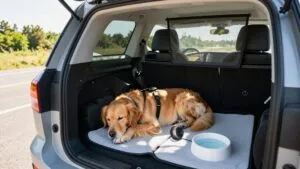
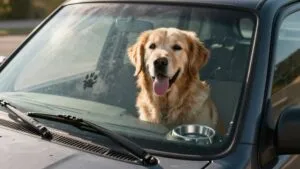
A water bowl can’t prevent heatstroke in a parked car because it doesn’t stop the cabin temperature from rising rapidly or restore effective cooling through panting. Your dog may drink, but water cannot offset trapped solar heat or a failing ability to release body heat. Cracked windows don’t make the situation safe.
- Cabin temperatures can rise nearly 20°F in 10 minutes.
- Panting becomes inefficient as air temperature and humidity increase.
- Spilled water may leave your dog without hydration.
- Direct sun and hot surfaces add heat continuously.
- Older, overweight, and short-nosed dogs decline especially quickly.
Don’t treat a full bowl as protection for an errand. Heatstroke may cause heavy panting, drooling, weakness, vomiting, collapse, seizures, and organ injury. Keep your dog out of parked vehicles.
Call 911 for Trapped Dogs
If you see a dog trapped in a hot car and showing distress, heavy panting, drooling, weakness, vomiting, collapse, or unresponsiveness, call 911 immediately. Give dispatch the vehicle’s location, description, license plate, dog’s condition, and whether the engine or air conditioning is running. Stay nearby, note the time and outside temperature, and ask staff to locate the driver.
| Action | Why | Tell 911 |
|---|---|---|
| Observe | Confirms urgency | Signs, time |
| Document | Supports response | Photos, plate |
| Wait safely | Guides rescuers | Exact location |
Don’t force entry unless local law clearly authorizes it or dispatch directs you; rules differ. If responders gain access, move the dog to shade, use cool, not ice-cold, water, and arrange urgent veterinary evaluation. Heatstroke can injure the brain, kidneys, and liver even after the dog appears better. Continue monitoring until transported.
Conclusion
Never assume a parked car is safe for your dog. Interior temperatures can climb rapidly, even with shade, cracked windows, or water available, and humidity further limits cooling. You should check the backseat every time you exit, avoid leaving any dog unattended, and act quickly if you see distress. If a dog is trapped in dangerous heat, call 911 or local animal control. Your prompt action can prevent heatstroke, organ failure, and death in dogs.