Back Seat vs Cargo Area for Dogs: Which Is Safer and More Comfortable?
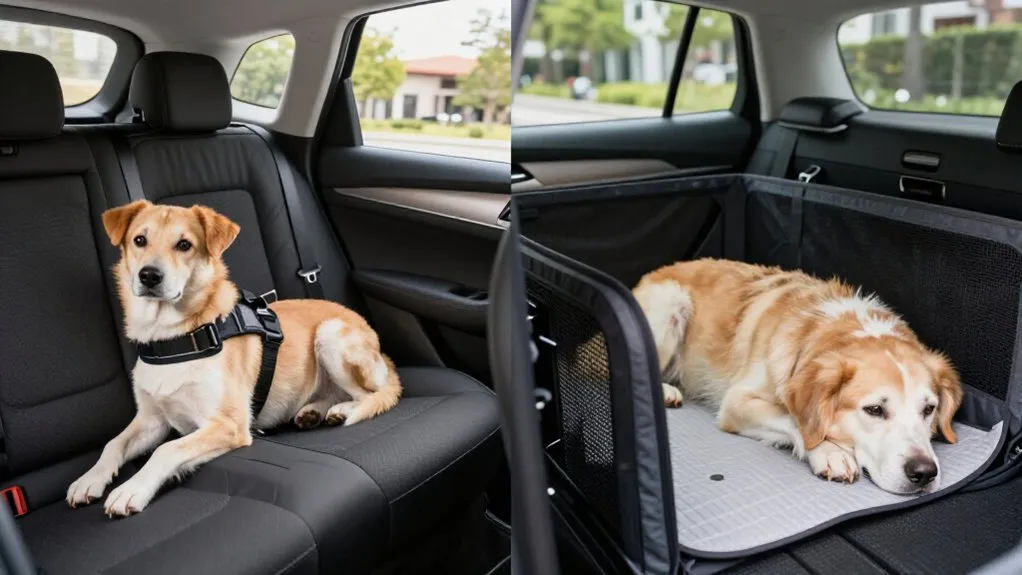
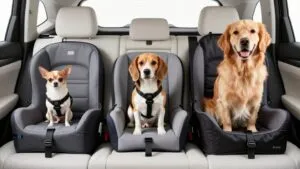
For dogs, you’ll provide the safest and most comfortable ride in your back seat with a crash-tested harness or seat-belt-secured carrier. This keeps your dog away from front airbags, improves emergency access, and offers better airflow.
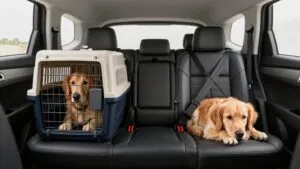
Choose cargo only when you can use a correctly sized hard-sided crate anchored to designated cargo tie-downs, with gear secured away from it. Dog size, trip length, and vehicle layout shape the best choice; setup details can further guide you.
Airbag Exposure and Escape Access
Although both locations can work with the right restraint, the back seat is usually the safer default because it keeps your dog out of the front passenger airbag’s deployment zone. Front-seat airbags deploy with force designed for adults and can severely injure or kill a dog.
| Location | Airbag and access |
|---|---|
| Back seat | Avoids front airbag; you can reach your dog quickly. |
| Cargo area | Avoids passenger airbags; emergency access may take longer. |
| Check | Rear curtains, exits, and vehicle-specific cargo deformation. |
| Avoid | Front passenger seat and loose travel anywhere. |
If your vehicle has rear curtains, check manual and keep your dog clear of deployment paths. Cargo space avoids cabin airbags but may sit in a rear crumple zone. Plan exits: carry a leash; keep doors accessible.
Harness Anchoring and Crate Placement
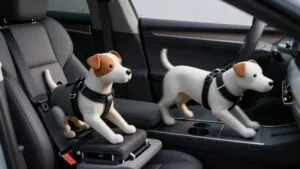
Secure a dog in the back seat with a crash-tested harness attached to the vehicle seat belt or compatible LATCH anchor, following both the restraint and vehicle instructions. Check that the harness fits snugly without restricting breathing or shoulder movement, and use only the routing method specified by its manufacturer. Don’t connect a tether to a collar, a seat headrest, or an unapproved anchor. A hammock or seat cover can improve footing and protect upholstery, but it doesn’t replace restraint.
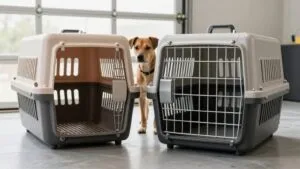
For cargo travel, choose a crate that lets your dog stand, turn, and lie flat. Place it on a level floor, maintain ventilation, and secure every designated tie-down point to the vehicle’s cargo anchors. Test for shifting before departure. Otherwise, choose back-seat travel instead.
Crash-Test Injury Reduction
Proper anchoring matters because crash-tested restraints reduce the forces that can eject your dog or throw them into seats, doors, or other occupants during a sudden stop or collision. In the back seat, a crash-tested harness or seat-belt-secured carrier helps limit forward motion and keeps your dog away from front-airbag hazards. Choose equipment with credible crash-test evidence, designed for your dog’s weight and body shape; comfort alone doesn’t establish collision protection.
In a cargo area, an appropriately sized, rigid crate can offer meaningful protection only when secured against sliding or rotation. A loose dog, loose crate, or barrier alone can’t manage crash forces, and rear cargo zones may deform in some impacts. Restraint reduces secondary impacts, supports steadier positioning, and protects every vehicle occupant.
Daily Loading and Setup Time
Daily convenience matters because a restraint that’s difficult to install is less likely to be used correctly every trip. Back-seat harnesses can be quick if you leave the belt path accessible and practice the same routine: secure your dog’s harness, route the vehicle belt, and check for slack. Cargo travel often takes longer because you must guide your dog into the crate, close it, and attach every tie-down securely.
Never skip those steps simply to save time; a loose dog or sliding crate creates serious injury risk. Choose the option you’ll reliably use, and train your dog with calm, reward-based loading sessions. For older or larger dogs, assess whether door access, ramps, or steps reduce strain and hesitation. Before driving, confirm each connection is secure.
Flat Cargo Floors for Crates
A flat cargo floor helps a crate sit level, so your dog can stand, turn, and rest without sliding or being forced onto an incline. Before driving, check that the crate footprint rests on the floor and that folded seats don’t create a ridge. A level setup supports steadier footing, helps reduce fatigue on longer rides, and lets bedding stay in place.
- Measure the cargo length, width, and height with seats in their travel position.
- Test the loaded crate for rocking, then anchor it to designated cargo tie-downs.
- Watch your dog during a trial; reposition bedding if it bunches or shifts.
Don’t use a sloped floor as-is: a crate can slide or tip during braking. Choose a different option if you can’t secure it level.
Resale Value From Interior Wear
Although neither location eliminates wear, a restrained dog in the back seat usually exposes more visible upholstery to hair, scratches, drool, and muddy paws, which can reduce perceived resale appeal. A washable, fitted seat cover and door protectors limit cosmetic damage, but don’t substitute for a crash-tested harness or secured carrier. Vacuuming promptly, wiping spills, and cleaning paw marks prevent stains and odors from becoming lasting defects.
In the cargo area, a properly sized, anchored crate can confine hair and dirt to a removable surface, protecting side trim and rear carpeting. Yet you shouldn’t choose it solely to preserve resale value: an unsecured crate or dog endangers your pet and can damage the vehicle during a sudden stop. Use durable liners, inspect anchors regularly.
Rear Ventilation and Temperature Control
Rear-seat travel usually gives small and medium dogs better access to cabin HVAC vents, so you can monitor their comfort and maintain a stable temperature more easily. That matters because cargo compartments may receive less direct airflow, especially behind a closed cargo cover or in vehicles without dedicated rear vents.
- Pre-cool or pre-warm the cabin before loading your dog.
- Aim vents away from your dog’s face while keeping air circulating around the restraint or crate.
- Check your dog regularly for panting, shivering, or restless repositioning, and adjust HVAC settings safely when stopped.
Never leave your dog unattended in a parked vehicle; temperatures can become dangerous quickly, even on mild days. Use a thermometer if you can’t assess the cargo area’s climate.
Dog Motion Sickness by Location
Motion sickness can vary by location, so watch how your dog responds in the back seat versus the cargo area. You may find that a rear-seat restraint offers a steadier, more visible ride, while a properly anchored cargo crate better limits movement for some dogs. Whichever location you choose, keep your dog securely restrained and consult your veterinarian if nausea, drooling, or vomiting persists.
Back Seat Motion Sickness
Where your dog rides can affect comfort, but no seating location reliably prevents motion sickness. In the back seat, your dog may feel nausea when visual cues, inner-ear signals, and vehicle movement don’t match.
Puppies and anxious travelers can be especially susceptible. Watch for drooling, lip licking, yawning, whining, restlessness, or vomiting, and stop safely if signs escalate.
- Use a crash-tested harness or secured carrier; a loose dog can’t brace safely.
- Keep the cabin cool, ventilated, and free from strong scents.
- Build tolerance with short, calm rides, then ask your veterinarian about persistent symptoms.
Avoid heavy meals just before travel, offer water during breaks, and never punish nausea. A timely veterinary plan can protect both your dog’s welfare and your attention on the road.
Cargo Area Motion Sickness
In a cargo area, your dog may experience motion-sickness symptoms if extra noise, vibration, limited outward visibility, or an unstable crate adds stress to the normal sensations of travel. Watch for drooling, lip-licking, yawning, whining, restlessness, vomiting, or lethargy. A cargo space can amplify road and drivetrain vibration, and some dogs become uneasy when they cannot orient themselves through a window.
Keep the area cool and ventilated, but don’t rely on an open window, which can create unsafe airflow and escape risks. Use a sized, hard-sided crate on a flat surface and anchor it to vehicle tie-down points so it cannot slide or tip. Introduce the crate gradually, take short trips, and stop for breaks. If signs persist, ask your veterinarian about motion-sickness treatment.
Commuting Versus Weekend Camping
For daily commuting, you’ll usually prioritize a back-seat crash-tested harness or secured carrier to limit distraction and injury risk. For weekend camping, a properly sized, anchored cargo crate may give your dog more room while leaving space for essential gear. On longer trips, check ventilation, temperature, ride comfort, and restraint fit so your dog can rest safely.
Daily Commute Safety Needs
Daily commuting calls for a simple, repeatable safety setup: secure your dog in the back seat with a crash-tested harness or seat-belt-secured carrier, rather than letting them ride loose. This placement keeps them away from front airbags, limits driver distraction, and makes every work trip predictable.
- Fit the restraint to your dog’s size and follow manufacturer and vehicle instructions.
- Check the belt, carrier, or LATCH connection before leaving; a loose tether permits harmful movement.
- Help your dog settle calmly, with stable footing and comfortable cabin temperatures.
A cargo area isn’t a shortcut for a restless commuter. A barrier may block access to you, but it doesn’t prevent crash injury. Choose cargo travel only with a correctly sized, firmly anchored crate. Practice short rides, and reassess if your dog pants, paces, or shows distress.
Camping Gear and Space
Weekend camping changes the space calculation: tents, food, water, and recovery gear can compete directly with your dog’s travel area. Before you load up, reserve a protected footprint for the dog and its restraint first. Don’t stack coolers, fuel, or loose equipment beside or on a crate; sudden braking can turn them into hazards.
If camping supplies consume the cargo bay, keep your dog in the back seat with a crash-tested harness or secured carrier. Use the cargo area only when a properly sized crate fits flat and you anchor it to vehicle tie-downs. A barrier may separate gear but won’t restrain the dog or stop a sliding load. Repack so heavy items stay low and secured, and don’t let gear compromise crate access.
Comfort During Longer Trips
Although a short commute may suit a restrained dog in the back seat, longer camping drives require enough room to lie flat, steady ventilation, and regular breaks.
For a daily ride, your dog may travel comfortably in the rear seat with a crash-tested harness and access to climate-control vents. For weekend camping, choose a properly sized crate in a flat cargo area only if you anchor it securely; a barrier alone won’t protect against impact or sliding.
- Let your dog stand, turn, and lie flat without crowding.
- Check airflow, cabin temperature, noise, and vibration; overheating or stress can escalate quickly.
- Stop every few hours for water, toileting, and a leash-controlled stretch.
Acclimate your dog to the restraint before departure at home.
Match Restraint to Dog Size
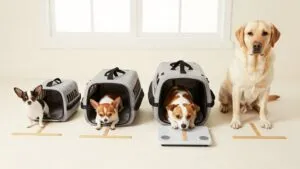
Choose the restraint around your dog’s size, weight, and travel posture—not convenience alone. A small dog may fit a seat-belt-secured carrier, but choose one with tested structural protection rather than relying on a soft booster. For a medium or large dog, use a crash-tested harness in the rear seat when it allows your dog to sit, stand, and lie down without excess slack. Follow the manufacturer’s weight limits and vehicle-specific belt or LATCH instructions.
If your dog needs cargo-floor space, select a hard crate tall enough to stand, long enough to lie flat, and wide enough to turn around. Anchor it to cargo tie-downs so it can’t slide. Don’t substitute a barrier, hammock, or oversized restraint: each can allow dangerous movement during a crash.
Conclusion
You’ll usually protect your dog best by matching the restraint and location to its size, vehicle, and trip. Use a crash-tested harness on the back seat or a securely anchored, crash-tested crate on a flat cargo floor; keep dogs away from front airbags and open escape routes. Check ventilation, temperature, and motion-sickness response. For daily commutes, choose the fastest safe setup. For camping, prioritize a stable crate, airflow, and comfort. Never let convenience override protection.