Are Crash-Tested Dog Harnesses Worth the Higher Price?
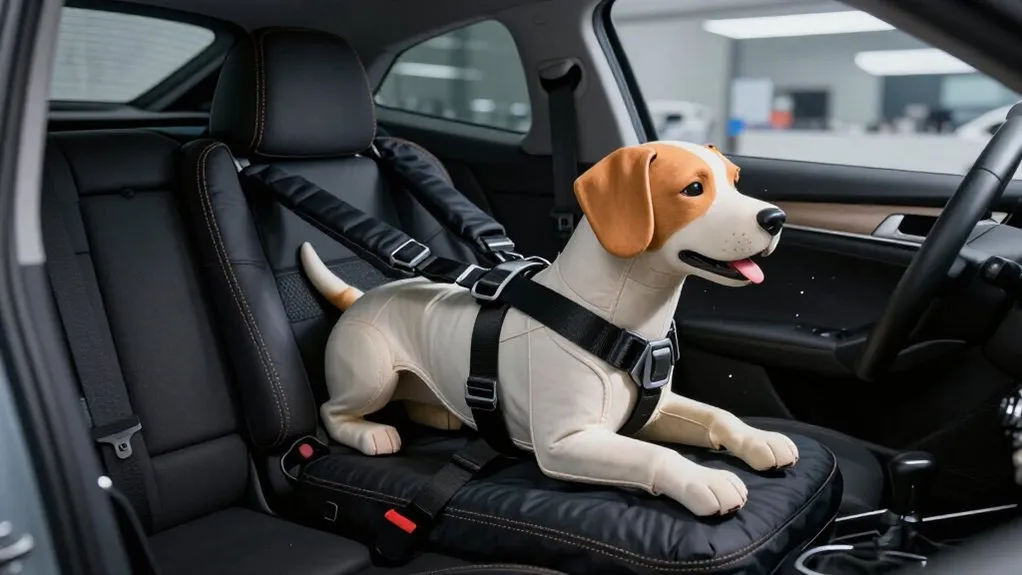
Crash-tested dog harnesses are usually worth the higher price if you drive at highway speeds, because they can limit forward movement and spread crash loads across your dog’s chest and torso.
Choose an independently tested model within your dog’s weight range, fit it snugly, and attach it only as directed in the rear seat. Don’t clip a car tether to a collar.
The fit, attachment, and test details ahead can be just as important too.
Worth It for Highway Travel
For regular highway travel, a crash-tested dog harness is generally worth the added cost because higher speeds create forces that simple tethers and untested harnesses may not withstand. In 30-mph impact testing, independently evaluated designs have restrained dog dummies more effectively, whereas numerous ordinary harnesses allowed dangerous forward movement or ejection. You’re paying for seat-belt-grade webbing, reinforced hardware, and broader chest-and-torso load distribution, not merely a brand name.
These features can reduce localized loading and keep your dog from becoming a projectile that could injure occupants. Choose a model rated for your dog’s weight, measure carefully, and follow its belt-routing instructions exactly. Check whether the stated price includes the tether or required anchor. Rear-seat placement also reduces exposure to airbag-related hazards during travel overall.
No Federal Crash-Test Standard
No U.S. federal rule sets a mandatory crash-test standard for dog harnesses, so a “crash-tested” label doesn’t automatically mean a product meets a uniform, independently verified safety threshold. Instead, examine who conducted the test, which protocol it used, and what results it publishes. Some labs adapt FMVSS 213 child-restraint conditions, but they aren’t legally required for pet gear.
CPS offers independent certification. By contrast, a manufacturer may call a harness crash-tested after commissioned testing that uses different dummy sizes, deceleration pulses, or pass/fail measures. Before paying a premium, look for a CPS designation or test report that identifies the size range, vehicle anchoring, and protocol. This documentation helps you separate verified claims from marketing and determine whether the test applies to your dog.
Performance in Sudden Stops
In a sudden stop or frontal crash, a properly fitted crash-tested harness can keep your dog from becoming a projectile by limiting forward excursion and spreading restraint forces across the chest and torso. During a 30-mph impact, independently tested models have demonstrated better dummy retention than consumer harnesses, some of which allowed dummies to launch in Center for Pet Safety testing. That difference matters during hard braking: momentum can drive a poorly restrained dog into a seatback, console, windshield, or occupant. Don’t assume a tether prevents injury. Confirm the harness matches your dog’s tested weight range, attach it as instructed, and keep slack minimal. Check webbing, buckles, and anchor connections before each trip; worn components or a loose fit can erase the protection testing suggests.
Step-In Versus Vest Designs
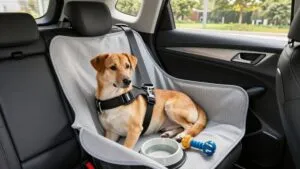
Step-in harnesses can make loading your dog easier, but you shouldn’t treat convenience as proof of crash protection. A vest-style design may provide broader chest coverage and better load distribution when it fits snugly and connects to an approved vehicle restraint. For car travel, verify that your chosen design is independently tested for your dog’s weight, correctly adjusted, and compatible with your seat-belt routing.
Ease Of Entry
How easily your dog enters a car harness can affect whether you use it correctly on every trip. Step-in designs let your dog place each front paw through an opening, which may suit dogs that dislike having gear guided over their heads. However, you must confirm both feet are positioned and secure every closure before attaching the vehicle restraint.
Vest-style designs often require you to guide the harness over your dog’s head, then fasten side buckles. This can be slower, but it may reduce handling around reluctant paws. Neither entry method establishes crash protection; independent testing, correct sizing, and manufacturer-specified installation do. Practice at home, reward calm cooperation, and inspect straps and buckles before every drive. Never force an anxious dog through either design.
Chest Coverage And Support
Chest coverage shapes how a car harness spreads crash forces across your dog’s body. A vest-style design uses a broad, padded chest panel to distribute load over the sternum, ribcage, and shoulders rather than concentrating it at narrow webbing edges. That wider contact area can better limit localized soft-tissue pressure when the restraint arrests forward motion.
A step-in design typically relies on straps that form loops around the front legs and chest. It may suit walking, but minimal chest structure can concentrate forces and allow straps to shift under loads. You shouldn’t assume either silhouette is safer: crash-test results, not padding or marketing terms, determine performance. Prioritize a model independently tested with a dog dummy and load-bearing chest construction. It must manage crash force.
Fit For Car Travel
For car travel, a harness must fit securely enough to control forward movement without restricting normal breathing or creating pressure points. Step-in designs can be easy to put on, but their narrower strap layouts may concentrate crash loads and allow more shifting if you don’t adjust them precisely. A crash-tested vest typically spreads restraint forces across the chest and torso, making secure fit easier to verify.
Measure your dog’s girth and weight against the model’s tested range, then follow its belt-routing instructions exactly. You should fit two fingers beneath straps without leaving slack at the chest or shoulders. Check that your dog can sit, lie down, and breathe normally. Recheck adjustments after drives; twisting, chewing, or escape attempts can signal poor fit or discomfort.
Dog Size and Fit
Match the harness to your dog’s measured chest girth and weight, staying within the manufacturer’s crash-tested size range. Adjust every strap for snug, even contact without restricting breathing or shoulder movement, since looseness can increase forward travel in a collision. Check the fit against your dog’s breed and body shape, as deep chests, narrow waists, and short-backed builds may require a different model or size.
Matching Harness Size
A crash-tested harness protects your dog only within its specified size and weight range and when it fits correctly. Start by weighing your dog and taking the measurements the manufacturer requires, typically chest girth and sometimes neck or torso length. Use that brand’s chart, not a generic small, medium, or large label: sizing and tested mass ranges vary substantially among models.
Choose a harness whose approved range includes your dog’s current weight rather than placing a dog at, or beyond, an endpoint. Dynamic testing commonly uses defined dummy masses, so protection outside the listed range may be unproven. Also consider body build. Deep-chested, narrow-waisted, short-legged, or broad-shouldered dogs may not match a chart based on weight alone. Remeasure growing dogs before every car trip.
Adjusting For Secure Fit
Once you’ve selected the correct size, adjust the harness so the chest and torso panels sit flat against your dog without pinching or restricting normal breathing. Snug each strap evenly; you should fit two fingers beneath it, but the harness mustn’t shift, twist, or gap when your dog walks, sits, or lies down.
| Check | What you do | Why it matters |
|---|---|---|
| Chest panel | Center it | Spreads crash loads |
| Buckles | Lock and recheck | Prevents loosening |
Before every drive, inspect webbing, buckles, and stitching for wear, then secure the tether exactly as the manufacturer directs. Test the fit indoors first.
A poorly adjusted certified harness can allow excess forward movement and undermine its tested restraint performance. Readjust after settling, because straps can loosen during normal movement slightly.
Breed And Body Shape
Fit adjustments only work when the harness suits your dog’s size and body shape. Use the maker’s chest-girth and weight chart, then confirm that your dog falls within the model’s crash-tested range; results outside tested sizes may not apply. Deep-chested breeds, narrow-waisted sighthounds, broad-shouldered bulldogs, and short-legged dogs can load straps differently than the test dummy.
Choose a design that keeps the chest panel centered on the sternum, avoids pressure at the throat, and doesn’t allow the torso to slide through the openings. You should fit the harness while your dog stands, sits, and lies down. Check that the belt route and attachment remain positioned in each posture. If you can’t obtain secure contact without excessive length or gaps, choose a secured crash-rated crate.
Rental-Car Road Trips
Rental-car road trips make a crash-tested dog harness especially worthwhile because unfamiliar seat-belt geometry, rear-seat layouts, and cargo arrangements can complicate safe restraint. Before departure, inspect the rear seat, locate approved belt paths, and confirm that the harness’s tether or vehicle belt fits as specified. Don’t assume a latch anchor, headrest, or cargo tie-down is equivalent.
Choose a model independently tested for your dog’s weight range, then adjust it snugly across the chest and torso. Test the setup while parked: your dog shouldn’t reach the front seats or slip free. Keep your dog in the rear seat, away from front airbags. A certified harness costs more, but its reinforced webbing and hardware offer meaningful protection when an unfamiliar rental’s layout raises installation uncertainty.
Not Ideal for Every Dog
Although crash-tested harnesses offer important protection, they aren’t ideal for every dog or travel setup. Your dog’s size, body shape, mobility, and temperament can affect whether a tested model fits and functions safely. Most products pass within specific weight ranges, so you shouldn’t assume protection extends to a dog outside the manufacturer’s tested limits.
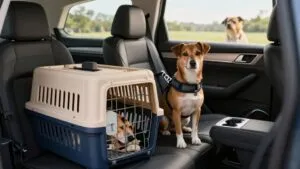
Deep-chested, short-legged, giant, or unusually shaped dogs may lack adequate chest coverage or secure adjustment. A dog that panics, chews webbing, or cannot sit or lie comfortably may struggle against the restraint, undermining real-world safety. Before buying, measure carefully, review compatibility with your vehicle, and practice short supervised rides. If the harness cannot achieve a snug, stable fit, choose a properly secured crash-rated crate or seek veterinarian guidance for travel.
Clipping Harnesses to Collars
Never clip a car restraint or its tether to your dog’s collar: in a collision, the concentrated force can injure the neck, throat, or cervical spine and may allow the dog to slip free.
Use only the attachment point specified by the restraint’s manufacturer, typically a reinforced harness connection designed to spread crash loads across the chest and torso. A collar is for identification and everyday walking, not for absorbing deceleration.
- Before every drive, confirm the tether connects directly to the harness.
- Check that straps lie flat and don’t press on the throat.
- Remove damaged harnesses; frayed webbing or bent hardware can fail.
- Imagine the violent forward force: your choice protects your dog’s body, not just their position.
Crash-tested performance depends on correct use.
Inspect Seat-Belt Buckle Compatibility
Before you drive, confirm that the harness tether’s seat-belt connector fully engages with your vehicle’s buckle and remains locked under firm pulling. Buckle shapes, release-button positions, and stalk angles vary by vehicle, so a connector that fits one rear seat may not fit another. Don’t assume a universal-looking metal tongue is compatible. Insert it until you hear and feel the click, then pull the tether sharply in several directions without pressing the release button.
Check that the buckle doesn’t sit against rigid trim, twist the webbing, or permit accidental release. Follow the harness maker’s approved routing and vehicle-compatibility guidance; crash-test results apply only to specified configurations. Avoid extender clips unless the manufacturer explicitly approves them, because they can alter loading or create leverage. Recheck after seat adjustments too.
Conclusion
If you drive at highway speeds, a crash-tested harness can justify its higher price because it helps limit dangerous movement during sudden stops. Choose a vest-style model that fits your dog’s weight and body shape, and use it with a compatible seat-belt buckle, never clip the tether to a collar. Since no federal standard governs testing, review independent results carefully. For short, low-speed trips or dogs that can’t tolerate restraint, other safety options may suit you.