Do Dog Car Harnesses Work in a Crash? What Testing Shows
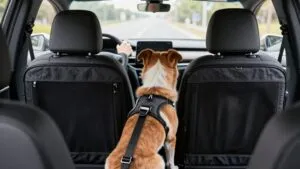
Crash-tested dog car harnesses can reduce your dog’s forward travel and ejection risk, but they can’t prevent all injuries. Independent 30-mph frontal tests using dog-sized dummies assess excursion, rotation, acceleration, and hardware failure.
You’ll get the best protection only when you use the tested harness, tether, vehicle anchor, and size-specific fit exactly as directed. Never attach a tether to a collar. Testing also reveals why anchor choice, tether length, and multi-point geometry matter.
Crash-Tested Harnesses Protect Best
Crash-tested harnesses offer the best protection only when the complete restraint system—harness, tether, and vehicle anchor—has passed credible dynamic testing. You should look for evidence that the product controlled a dog-sized test dummy during a 30-mph frontal crash pulse, rather than merely surviving a static pull test. Dynamic results reveal whether buckles deform, stitching pulls through, webbing tears, or the tether permits excessive forward travel and rotation.
Confirm that testing covers your dog’s specific weight range, because performance can vary between sizes. Fit the harness snugly according to its instructions, attach the tether only to the designated vehicle anchor, and minimize slack without restricting normal posture. Don’t clip a crash tether to a collar: crash loads can concentrate at the neck. Risk still remains.
Center for Pet Safety Standards
The Center for Pet Safety (CPS) provides an independent benchmark for evaluating whether pet travel restraints can withstand crash forces. As an independent 501(c)(3) research and advocacy organization, CPS develops pet-specific protocols and publishes crashworthiness findings for harnesses, carriers, and crates.
Its dynamic sled tests adapt FMVSS 213 child-restraint conditions, including a standardized test bench, crash pulse, excursion flags, and LATCH attachment points. CPS mounts each product as its manufacturer directs and uses instrumented dog simulants matched to relevant mass and geometry.
Evaluators document simulant movement, peak acceleration, hardware damage, strap or seam failure, anchor separation, and enclosure integrity. Quasi-static screening can identify load-related weaknesses before dynamic evaluation. When you compare products, seek CPS results for your dog’s applicable size and configuration, not claims.
After a 30-MPH Frontal Impact
At a 30-mph frontal impact, a properly fitted, independently crash-tested harness-and-tether system can limit your dog’s forward travel and help prevent ejection, but it can’t eliminate injury risk. Crash laboratories commonly model this event on the 30-mph frontal pulse used for FMVSS 213 benchmarks. During the rapid deceleration, your dog’s mass continues moving forward until the restraint loads.
A credible dynamic test evaluates whether hardware, webbing, stitching, and load-bearing panels remain intact while controlling excursion and rotation. Results show that many products marketed for vehicle use either failed structurally or allowed dummies to launch from the seat. Even a passing model may perform differently across dog sizes, so verify published results for your dog’s weight range. Fit the harness snugly and inspect it regularly.
Three-Point Tether Systems
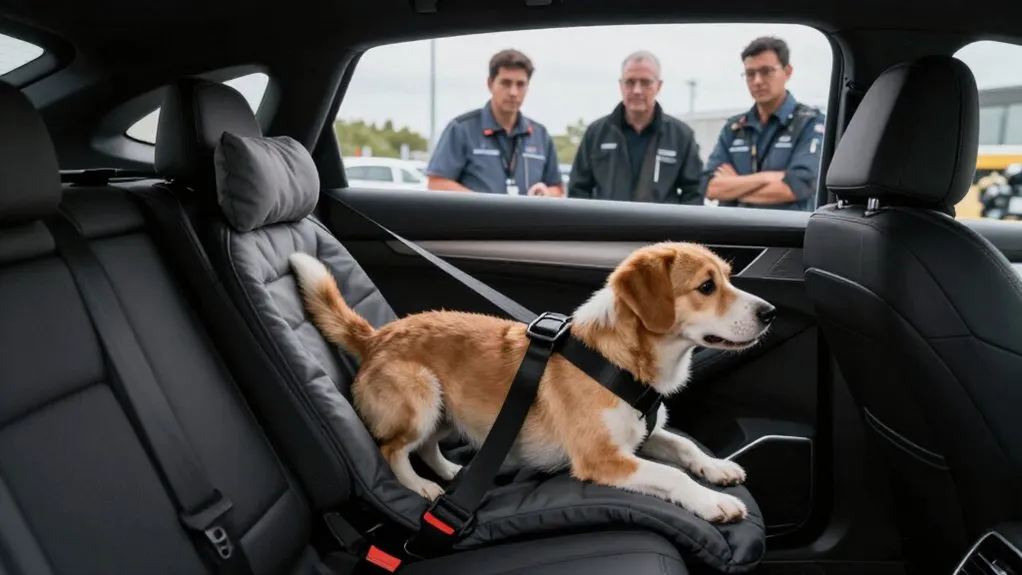
A three-point tether connects your dog’s crash-rated harness to multiple vehicle anchor points, distributing impact loads and limiting forward travel and rotation. Its crash performance depends on the complete system: tether geometry, reinforced hardware, energy management, and testing for your dog’s specific size. You must attach it only as directed, remove slack, and confirm a snug harness fit before every trip.
How Three-Point Tethers Work
Three-point tether systems restrain your dog through a crash-rated harness connected to the vehicle at multiple points, distributing collision loads across the chest and torso instead of concentrating force at one attachment. Typically, two straps run from the harness to separate vehicle anchors, while a third connection stabilizes the system through the seatbelt path or another approved anchor. This geometry creates multiple load paths and helps keep the harness centered as your dog moves forward.
The tether transfers restraint forces into vehicle-mounted hardware, while the harness’s broad panels spread those forces over stronger body regions. You should connect every point exactly as the manufacturer specifies and route straps without twists or slack. Don’t substitute a collar connection: it can focus load on the neck.
Crash-Test Performance Factors
Crash-test performance depends on whether the complete three-point system—the harness, tether hardware, vehicle anchors, and fit—keeps the dog restrained without concentrating damaging forces.
In controlled 30-mph crash pulses, researchers assess whether the system limits forward excursion, rotation, and ejection while its load-bearing components remain intact. Static screening can expose weak webbing or hardware, but it can’t predict dynamic behavior alone. Published testing also shows that results may vary by dummy size, so you should seek evidence for your dog’s tested weight range.
| Test factor | Why it matters |
|---|---|
| Dynamic retention | Limits launch and rotation |
| Load-path integrity | Prevents hardware, webbing, or seam failure |
| Size-specific evidence | Confirms performance isn’t assumed across sizes |
A passing claim should identify the protocol, impact speed, dummy mass, and complete configuration tested.
Proper Fit And Attachment
Even a crash-tested harness can fail to protect your dog if it fits loosely or attaches to the vehicle incorrectly. You should measure your dog and use the manufacturer’s size chart, then tighten the torso straps so the harness stays centered without restricting breathing or shoulder movement.
Use the tether supplied with the tested system; don’t clip it to a collar or substitute un-rated hardware. A three-point tether routes load through three connection points, helping distribute crash forces and limit forward travel and rotation. Attach each point to approved vehicle anchors exactly as instructed, and remove excess slack. Check buckles, D-rings, webbing, and stitching before every trip. Testing shows fit and attachment matter because slippage, long tethers, or anchor failure can permit dangerous launching.
Dog Size Alters Protection
Your dog’s size changes the crash loads, motion, and restraint demands a harness must manage. Small dogs can slip or rotate in poorly fitted systems, while larger dogs generate forces that require stronger webbing, anchors, and hardware. Choose a harness crash-tested for your dog’s specific weight range, because a pass in one size doesn’t confirm protection in another.
Small Dogs Face Different Forces
Small dogs don’t simply experience a smaller version of the same crash: their lower mass, body proportions, and harness fit can change how the restraint manages force. In a frontal impact, your dog’s body can move farther relative to loose webbing or a poorly positioned chest panel, allowing rotation, slippage, or contact with the seat.
Testing shows that performance can vary by size within the same product line, so a pass in one configuration doesn’t establish protection for your dog. Check for dynamic crash-test results tied to the exact size and weight range. A snug, manufacturer-specified fit helps keep load across the chest and torso, rather than concentrating it at the neck or permitting escape from the harness. Avoid collar attachments; use engineered tether systems.
Large Dogs Need Stronger Restraints
As a dog’s weight rises, crash loads on the harness, tether, and vehicle anchor increase sharply, so large dogs need restraints engineered and dynamically tested for their specific size range. At 30 mph, a 75-pound dog’s momentum can impose forces that exceed the capacity of lightweight webbing, stitching, buckles, or seat-belt attachments. You should seek published dynamic-crash results for a dummy near your dog’s weight; don’t rely on a generic “crash-tested” label.
CPS protocols have evaluated 25-, 45-, and 75-pound dummies, and studies found that performance can change across sizes within one product line. Select an harness-and-tether system with reinforced load-bearing hardware and a vehicle-compatible anchor. Static pull tests help screen out weak components, but only dynamic testing shows whether the system controls motion.
Fit Changes Crash Performance
Strength alone doesn’t determine crash protection: the harness must also fit your dog’s body and tested weight range. Controlled CPS testing used 25-, 45-, and 75-pound dummies, and results showed that one model can perform differently across sizes. A loose chest section permits forward rotation or escape; an undersized unit can concentrate force at seams, hardware, and the torso.
| Fit check | Crash concern |
|---|---|
| Loose torso band | Rotation or slippage |
| Wrong weight range | Untested load path |
| Long tether | More forward travel |
Measure chest and girth, follow the manufacturer’s chart, then confirm the tether and vehicle anchor are specified for that exact size. You should verify crash data—not merely tensile testing—for the purchased size. A snug, nonrestrictive fit improves restraint geometry; it can’t eliminate injury risk.
Securing the Back-Seat Anchor
A crash-tested harness can only perform as designed when you secure its tether to a vehicle anchor rated for that purpose. Use the attachment point specified in the harness instructions, typically the vehicle’s seat-belt buckle or a designated lower anchor, rather than a cargo hook, headrest post, or child-seat anchor unless the manufacturer expressly approves it.
Before each trip, fully engage the connector and check that the webbing lies flat without twists or contact with sharp trim. Keep the tether at the tested length; excess slack permits greater forward travel and changes the load path. Don’t clip a tether to a collar or substitute untested hardware. Published crash testing shows attachment components can deform or detach under load, so inspect buckles, stitching, and connectors.
No Harness Eliminates Injury Risk
Even a properly fitted, crash-tested car harness can’t make a collision safe for your dog. Dynamic tests modeled on a 30-mph FMVSS 213 crash pulse show why: restraint can limit forward travel and ejection, yet abrupt deceleration still transfers substantial force through the body. Outcomes depend on impact direction, vehicle geometry, dog size, tether length, and harness fit.
| Test finding | What it reduces | What remains possible |
|---|---|---|
| Controlled forward motion | Ejection risk | Chest, spinal, or internal trauma |
| Reinforced load paths | Hardware separation | High deceleration loads |
| Size-specific fit | Rotation and slippage | Injury in severe or multi-impact crashes |
You lower risk by using testing for your dog’s size, installing the complete system exactly as directed, and replacing damaged components. Drive defensively: no restraint can overcome crash energy.
Never Clip Tether to Collar
Because a collision can load a restraint system in milliseconds, you should never clip a vehicle tether to your dog’s flat collar. A collar concentrates deceleration forces on the neck rather than distributing them across the chest and torso. Published crash-testing guidance identifies collar attachment as a source of dangerous cervical loading, airway trauma, and possible ejection if the collar slips or fails.
- Use the attachment point specified for a crash-tested vehicle harness.
- Position the harness so its load-bearing straps sit flat and snug.
- Remove ordinary walking collars before travel when they could snag.
- Replace damaged webbing, stitching, buckles, or connectors before each trip.
This setup won’t make crashes harmless, but it directs restraint loads through body areas engineered to tolerate them better overall.
Verify Your Vehicle’s Tether Rating
Before using a dog car harness, verify that your vehicle’s intended anchor can handle the restraint system and that the manufacturer permits that use. Check your owner’s manual and the harness instructions: a seat-belt routing, cargo tie-down, top-tether, or lower anchor may have different approved uses and load limits.
Don’t assume a child-seat LATCH anchor, head-rest post, or cargo hook is suitable for a dog tether. Vehicle anchors are engineered and labeled for specific restraint geometries and loading directions. A crash can multiply your dog’s weight into a much higher force. Confirm the attachment point, connector, and tether match the tested configuration for your dog’s size. Keep the tether short enough to limit travel, without creating excessive slack or load.
Conclusion
Crash testing shows that you’ll protect your dog best with a Center for Pet Safety–certified harness, a properly routed three-point tether, and a rear-seat anchor rated for the load. At 30 mph, fit, dog size, and attachment point strongly affect outcomes. Don’t clip a tether to a collar, and don’t assume any harness prevents injury. Follow manufacturer weight limits, inspect hardware, and secure your dog correctly on every trip. Proper use reduces avoidable crash risks.