Ford Maverick Dog Setup: Fitting a Dog in a Compact Pickup
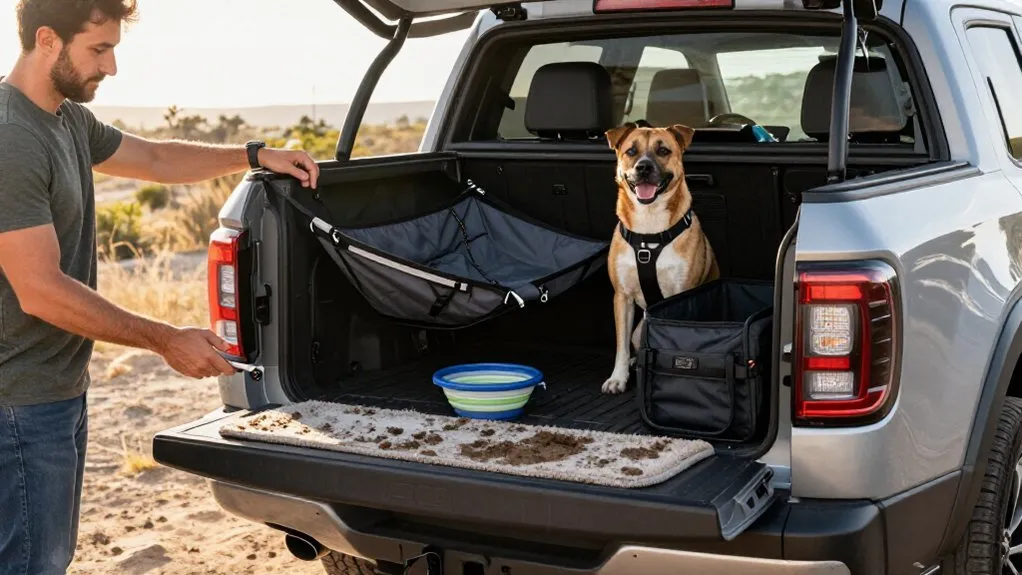
You can fit a dog safely in a Ford Maverick by reserving the rear seat for a properly sized, secured crate or crash-tested harness.
Measure your dog and the crate’s assembled exterior footprint before buying.
Keep loose gear out, preserve access to belts and crate doors, and follow approved attachment instructions.
Don’t rely on the rear window for bed ventilation, especially in heat or rain.
The details below help you plan a safer setup.
Maverick Rear Seat Dog Fit
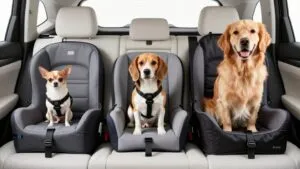
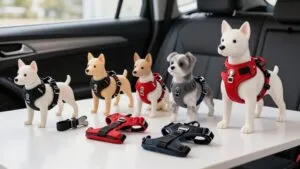
The Ford Maverick’s rear seat can work well for one medium or large dog, especially when you use a secured harness or a compact, crash-tested crate. Reserve the rear area for your dog during travel, not passengers, bags, or extra loose gear. Use a seatbelt-compatible restraint connected according to its instructions, and keep your dog behind the front seats to limit distraction.
A durable seat cover or fitted liner protects upholstery and adds footing; avoid slippery blankets that bunch under paws. Help older, short-legged, or injured dogs enter through the rear door instead of letting them jump. Keep water, a leash, and cleanup supplies within reach, but secure them. Before longer drives, take short trips to confirm your dog can settle comfortably and safely.
Crate Dimensions by Dog Size
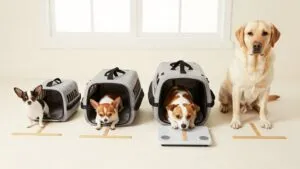
For a crate-based Maverick setup, size the crate to your dog’s actual standing dimensions rather than breed or weight alone. Measure nose to tail base, then add 2 to 4 inches; measure floor to highest head or ear point and add 2 to 4 inches. Allow 1 to 2 inches of side clearance at shoulders or hips. Confirm interior, not exterior, dimensions before you buy.
| Dog size | Typical interior crate size (L × W × H) |
|---|---|
| Toy | 18 to 20 × 12 to 14 × 12 to 14 in |
| Small | 22 to 24 × 14 to 18 × 16 to 18 in |
| Medium | 30 to 36 × 18 to 22 × 21 to 24 in |
| Large | 42 to 48 × 26 to 30 × 28 to 32 in |
Your dog must stand, turn, and lie naturally without excess space that lets the crate shift. Measure the Maverick location too, including door clearance. For puppies, use an adult-size crate with a divider, or plan to upgrade. Keep the crate low and stable, and recheck its fit after adding bedding, a mat, or a protective cover.
LATCH Anchor Terminology
LATCH—Lower Anchors and Tethers for Children—describes vehicle attachment points designed for child seats, not automatically for pet crates or harnesses. In your Maverick, lower anchors sit in designated rear-seat positions, while top tether anchors serve forward-facing child restraints. Don’t assume either anchor has been tested, labeled, or approved for your dog’s equipment.
Check the owner’s manual and the pet-product instructions before connecting anything. A harness that routes through a seat belt generally uses the belt system, not LATCH. If you choose a crate marketed as ISOFIX- or LATCH-compatible, confirm its approved attachment method, size limits, and placement requirements. Keep straps short enough to limit movement without bending seat cushions, blocking buckles, or interfering with head restraints. Never use cargo hooks or seat frames.
Maverick Payload With Dog Gear
Start with your Maverick’s door-jamb payload rating, then total the weight of passengers, dogs, crates, ramps, and every accessory. Keep bed gear secured and evenly distributed, and don’t assume storage space adds capacity. Staying within the rated limit protects handling, braking, and your dogs.
Calculating Total Payload Weight
Every pound in your Maverick counts toward payload: add the dog, crate, bedding, ramp, water, recovery gear, passengers, and any bed accessories, then compare that total with the payload figure on the driver-door certification label. Don’t rely on the often-quoted 1,500-pound maximum; your trim, options, and tires can reduce the available amount. Weigh loaded items individually, including food, tools, emergency supplies, and loose cargo. Include every occupant, not just the driver.
Keep a written running total and leave a margin for unexpected supplies. Place heavier cargo low, near the cab, and balance it side to side. Recheck after adding passengers or seasonal supplies. Exceeding the label limit can affect braking, steering, tire loading, and stability during emergency maneuvers. If close, remove nonessential weight first.
Crates, Ramps, And Accessories
Choose a crate that gives your dog room to stand, turn, and lie down without wasting the Maverick’s limited cabin or bed space. Measure the opening, interior floor, and crate footprint before buying. In the cabin, use a crash-tested crate or a vehicle-rated harness attached as directed; don’t route straps across airbag zones.
For bed use, choose a weather-protected enclosure and fasten it to rated tie-down points with appropriate straps. Add a rubber mat beneath it to limit sliding. A folding non-slip ramp reduces jumping strain; confirm its traction, width, and secure contact with the tailgate.
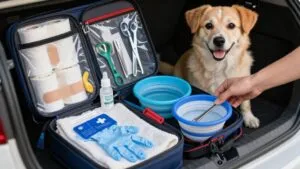
Pack water, a spill-resistant bowl, waste bags, towels, and a first-aid kit in separate bins. Inspect latches, anchors, ramp feet, and covers before every trip, and check rules.
Passenger And Dog Weight
After you’ve selected a crate, ramp, and travel gear, total their weight with your dog’s, passengers’, and any cargo before loading the Maverick. Check the payload figure on your driver’s-door certification label or owner’s manual, because it varies by trim and equipment. Subtract the combined weight from that rating before you add food, water, bedding, recovery supplies, or a second dog.
Weigh people and dogs realistically; winter coats, carriers, and muddy gear add up quickly. Keep heavier items low and close to the vehicle’s center, then secure every restraint so it can’t shift during braking or turns. Don’t assume a 1,500-pound estimate applies to your truck. Verify its specific rating and leave a margin for unexpected purchases or wet equipment. A simple checklist prevents mistakes.
Bed Storage Weight Limits
Treat the Maverick’s bed as part of your total payload, not extra capacity: the crate, bed liner, ramp, canopy, water, food, bedding, and dog all count against the rating on your driver’s-door label. Before buying accessories, weigh each item or use the manufacturer’s listed weight as a planning figure. A steel crate, bulky topper, and loaded storage bins can consume more usable margin than expected.
Keep dense supplies low and close to the cab, rather than stacked near the tailgate. Use the FLEXBED tie-downs to stop the crate and gear from shifting, and keep water containers upright in leakproof bins. Leave room to open the crate door, inspect straps, and reach emergency supplies quickly. Don’t ever stack loose items above bed rails during travel.
Staying Within Rated Capacity
Staying within the Maverick’s rated payload starts with the specific payload figure on your driver’s-door label, not a generic maximum. That label accounts for trim, drivetrain, and factory equipment. Add every passenger, dog, crate, ramp, bed liner, canopy, water container, recovery gear, and luggage before loading up.
A 1,500-pound figure may not apply to your truck. Use manufacturer accessory weights, then leave a margin instead of maxing out. Put the crate low, near the cab, secure it to rated tie-downs, and avoid tailgate-heavy loading. Recheck your total when you add a second dog or travel supplies. Payload covers cabin passengers and bed cargo, too. If your setup is close to capacity, remove nonessential gear, choose lighter equipment, or make separate trips for safety and better handling.
Measure 42-Inch Crate Footprint
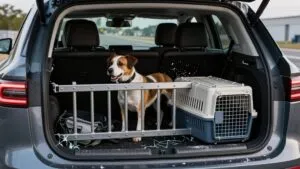
Before buying a 42-inch dog crate for your Ford Maverick, measure its actual exterior footprint, not just its advertised length. Measure the widest points: side rails, door latches, handles, and any folded or protruding panels. Record length, width, and height with the crate assembled, then add room for a non-slip mat and tie-down straps.
Compare numbers with usable bed-floor space, including wheel-well intrusion, liner thickness, and clearance to close the tailgate securely. Mark crate corners with tape or cardboard template before purchase. Confirm it sits flat without blocking tie-downs and allows strap routing. Leave access to latch crate, remove dog, and secure bedding. Measure cabin door openings, seat contours, and the folded-seat surface. A crate may fit inside yet remain too large to load fully.
Rear Window Ventilation Restrictions
Although the Maverick’s sliding rear window can add fresh air, it doesn’t provide safe, reliable ventilation for a dog riding in the bed. The opening sits behind the cab, so it only supplies limited airflow to a covered bed area and none you can measure or control at your dog’s crate. Crosswinds, bed covers, cargo placement, and the crate’s own panels can further block that flow.
Don’t use the window as justification for leaving your dog in the bed during warm conditions or for extended stops. Choose a properly ventilated canopy or a secure crate setup with dedicated airflow instead. Position the crate to preserve clearance around its vents, and check airflow at dog level before every drive. Never rely on guesswork alone, either.
Rainy-Day Vet Trip
For a rainy-day vet trip, keep your dog inside the Maverick’s climate-controlled cab whenever possible, secured in a seatbelt-anchored crate or crash-tested harness on the rear seat. Park as close to the clinic entrance as safely possible, then leash your dog before opening the door. Keep a compact towel, waterproof gear bag, medications, and vaccination records within reach on the floor behind the front seat or in a secured organizer.
Use the rear doors to limit lifting and keep your dog away from traffic. Wipe muddy paws at the threshold, and check the harness or crate connection before leaving. Don’t place your dog in the open bed during rain; cold, spray, and noise add stress. Drive smoothly, maintain cabin airflow, and offer water afterward.
Wet-Paw Seat Cover Slippage
Rain and muddy paws can make a rear-seat cover slide on the Maverick’s compact bench, creating an unstable surface for your dog and exposing upholstery. Use a cover with a waterproof, rubberized underside, plus seat anchors and adjustable headrest straps. Before each ride, dry the bench and your dog’s paws; trapped water reduces grip.
- Tuck side flaps between the seat cushion and backrest so the cover can’t creep forward.
- Route straps clear of buckles, then confirm belt latches remain easy to reach.
- Test the setup by pressing down at each corner before your dog climbs in.
If it still shifts, stop and reposition it rather than driving. A snug cover preserves limited rear-seat footing and helps your dog enter, stand, and settle safely inside.
Tailgate Tie-Down Loop Inspection
Inspect the Maverick’s tailgate tie-down loops before every bed-based dog trip, especially when they’ll secure a crate, ramp, or gear. Look for bent metal, loose fasteners, cracked coating, corrosion, and sharp edges that could weaken a connection or snag a leash. Never assume an aftermarket liner leaves each loop fully accessible.
- Pull each loop firmly by hand; it shouldn’t shift, rattle, or flex at its mounting point.
- Check straps, hooks, and carabiners for damage, then keep their load paths straight and clear of the tailgate edge.
- Secure the crate low and centered, retighten straps after loading, and leave enough bed space for safe access.
If anything feels compromised, don’t transport your dog in the bed until you repair it or choose a cabin setup.
Conclusion
Your Maverick can carry a dog safely when you match the setup to its compact dimensions and your dog’s needs. Measure the rear-seat or bed space before buying a crate, confirm payload limits, and use approved anchors and tie-downs correctly.
Keep ventilation clear, especially with rear-window restrictions, and plan for rain, mud, and veterinary stops. Check covers, loops, and crate stability before every trip. You’ll save space, prevent shifting, and keep your dog comfortable inside.